



Introduction: The Panasonic Lumix DMC-FS62 at a Glance
The Panasonic Lumix DMC-FS62 is a very compact digital compact camera built around a 10-megapixel CCD sensor and a four-times zoom lens. It was introduced in spring 2009.
What gives it a little extra character is the lens. The front of the camera is marked Leica DC Vario-Elmarit, and the body carries further markings for 10 Mega Pixels and MEGA O.I.S. Combine that with a 2.5-inch LCD and an Intelligent Auto mode, and you have a camera that mostly asks you to point and press.

A dedicated camera keeps photography apart from the pull of a phone. A simple compact adds to that by offering few settings and little to fiddle with.
Design Roots and Historical Background
A compact with a Leica name
The DMC-FS62 belongs to Panasonic's Lumix range of small digital cameras and arrived in spring 2009. Its headline feature is the lens, a Leica DC Vario-Elmarit zoom with four-times magnification, a 5.5 to 22 mm focal length and an aperture that moves from f/2.8 to f/5.9.
Price is part of the story too. At the start of 2010 it was the lowest-priced model in the shops that carried a Leica-branded lens.
How the lens and programmes are rated
Camera-wiki's assessment of the optics is measured: good enough for the job, but not exceptional. Its one clear compliment goes to the snow scene programme, a good scene mode for snow.

Key Technical Highlights
Sensor and lens
The heart of the camera is a 10-megapixel CCD sensor. In front of it sits the four-times zoom, with a maximum aperture that runs from f/2.8 at the wide end to f/5.9 when fully zoomed in. The lens gets darker as you zoom, so bright conditions suit it best.
Stabilisation and shooting modes
MEGA O.I.S. is the optical stabilisation system, and it helps keep telephoto shots and slower shutter speeds steadier when you hold the camera by hand. For everyday use, the Intelligent Auto mode takes care of the settings so you can concentrate on framing.
Screen, storage and power
Pictures are composed and reviewed on the 2.5-inch LCD. The camera accepts SD and SDHC cards, runs on a rechargeable lithium-ion battery and uses USB to move files to a computer. The camera also has a built-in electronic flash.
- 10-megapixel CCD sensor
- Four-times zoom, Leica DC Vario-Elmarit, f/2.8–5.9, 5.5–22 mm
- MEGA O.I.S. image stabilisation
- 2.5-inch LCD for framing and playback
- SD/SDHC card storage with USB file transfer
Modern-Day Use in 2026
Where the DMC-FS62 excels
A simple compact like this is at its best when you want a camera that is quick, light and forgiving. Intelligent Auto makes the decisions, the stabilisation supports handheld shooting, and the small body is easy to carry all day.
Use it for:
- Casual travel snapshots in good daylight
- Winter scenes, where the snow scene programme can help
- Family events and everyday documentation
- Learning composition without the distraction of menus
Practical shooting tips
- Shoot in bright light whenever you can; small CCD sensors reward good illumination.
- Hold the camera with both hands and keep your elbows close to your body for steadier frames.
- Use the built-in flash for nearby subjects only, and avoid pointing it at reflective surfaces.
- Copy your files off the card regularly and keep a backup.
Buying and Maintenance Guide
What to check before buying used
A second-hand compact can last for years, but only if the basics are sound.
- Look at the lens for scratches, dust, haze or fungus, using a bright light.
- Switch the camera on and off several times and listen for a smooth, even lens movement.
- Run the zoom from end to end and confirm it moves without hesitation.
- Check that the LCD is bright, free of dead lines and readable from several angles.
- Open the battery and card compartment, and look for corrosion, bent contacts or a loose door.
Take a few test photos and play them back on the LCD before you decide. Problems with focus, exposure or the screen are much easier to spot in a short test than on a quick glance.
Battery and memory cards
The DMC-FS62 uses a rechargeable lithium-ion battery and takes SD or SDHC cards. Batteries lose capacity with age, so a second-hand camera may run for a shorter time than a new one did.
- Fully charge the battery before your first outing and note how long it lasts.
- Use a card from a reliable brand and format it in the camera.
- Remove the battery when the camera will sit unused for a long time.
Basic care and accessories
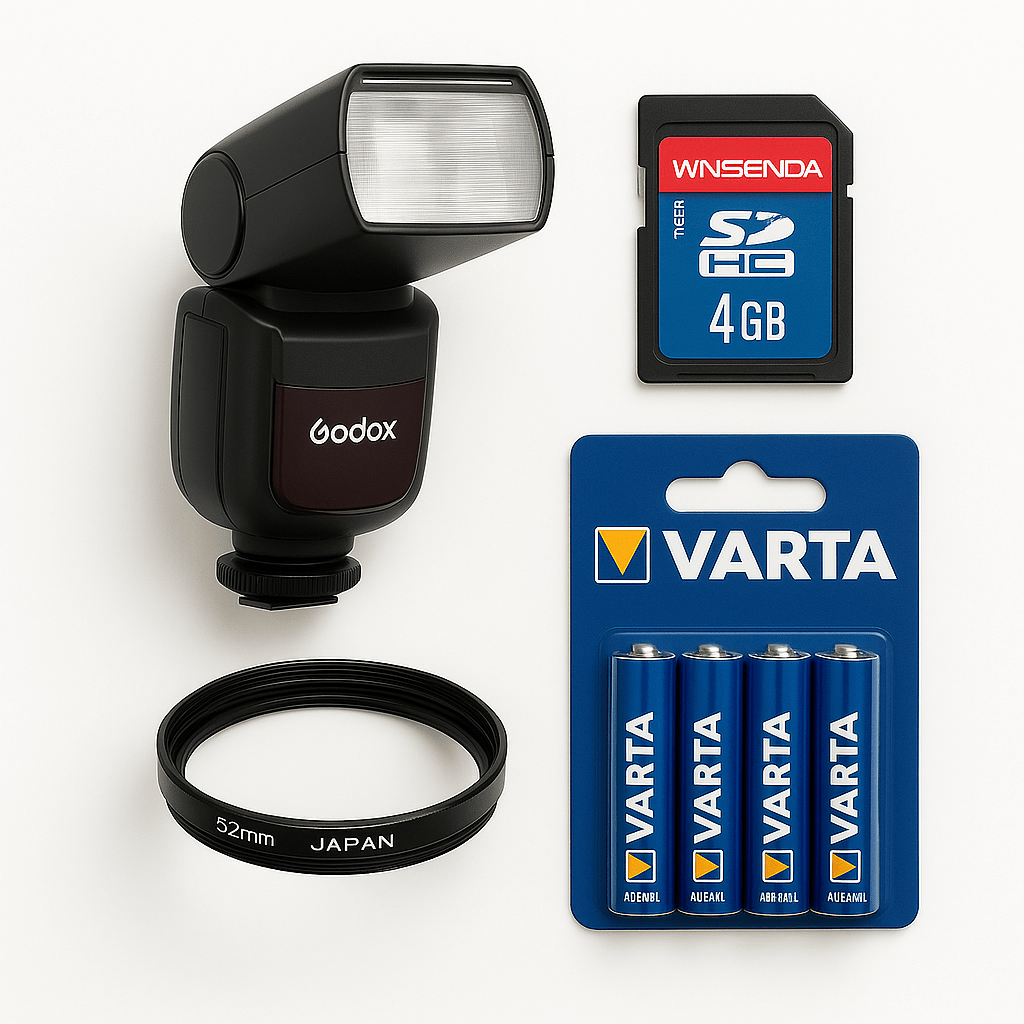
A few simple photography accessories keep a compact in good shape:
- A padded pouch to protect the lens and screen in a bag.
- A microfiber cloth and a small blower for dust.
- A spare card and a spare battery for longer days.
- A wrist strap, so the camera stays secure in your hand.
Conclusion: A Pocket Camera with a Famous Name
The Panasonic Lumix DMC-FS62 is a small, straightforward camera with a pleasantly unusual story. Its Leica-branded four-times zoom, its stabilisation and its Intelligent Auto mode make it easy to pick up.
It will not replace a modern camera, and the lens is rated as serviceable rather than exceptional. Still, for relaxed daylight photography and as a piece of compact camera history, it is worth a closer look if you inspect it carefully.
FAQs
When did the Panasonic Lumix DMC-FS62 come out? It went on sale in spring 2009.
What lens does the DMC-FS62 have? It has a four-times zoom Leica DC Vario-Elmarit lens with an aperture of f/2.8 to f/5.9 and a focal length of 5.5 to 22 mm.
What memory cards does it use? It works with SD and SDHC cards, and files can be moved to a computer over USB.
Does it have image stabilisation? Yes, it has MEGA O.I.S. optical stabilisation, which helps with handheld shots.
What should I check before buying a used one? Look at the lens, the zoom movement, the LCD, the battery compartment and the card slot, and take a few test photos.
Ready to explore cameras like the DMC-FS62? Browse our digital compact cameras, see more digital cameras, and add some photography accessories at DutchThrift.com.
Sources: Panasonic Lumix DMC-FS62 on camera-wiki.org, text licensed under GFDL 1.3; DutchThrift product descriptions and the markings on the camera.