



Introduction: The Olympus FTL at a Glance
The Olympus FTL is a 35mm single-lens reflex from 1971 that mounts its lenses by screwing them onto a 42mm thread, the M42 system. That makes it a camera with a foot in two worlds: an Olympus body with Zuiko glass on one side, and a huge family of screw-mount lenses on the other. If you enjoy exploring SLR film cameras, the FTL is an interesting one to read about.
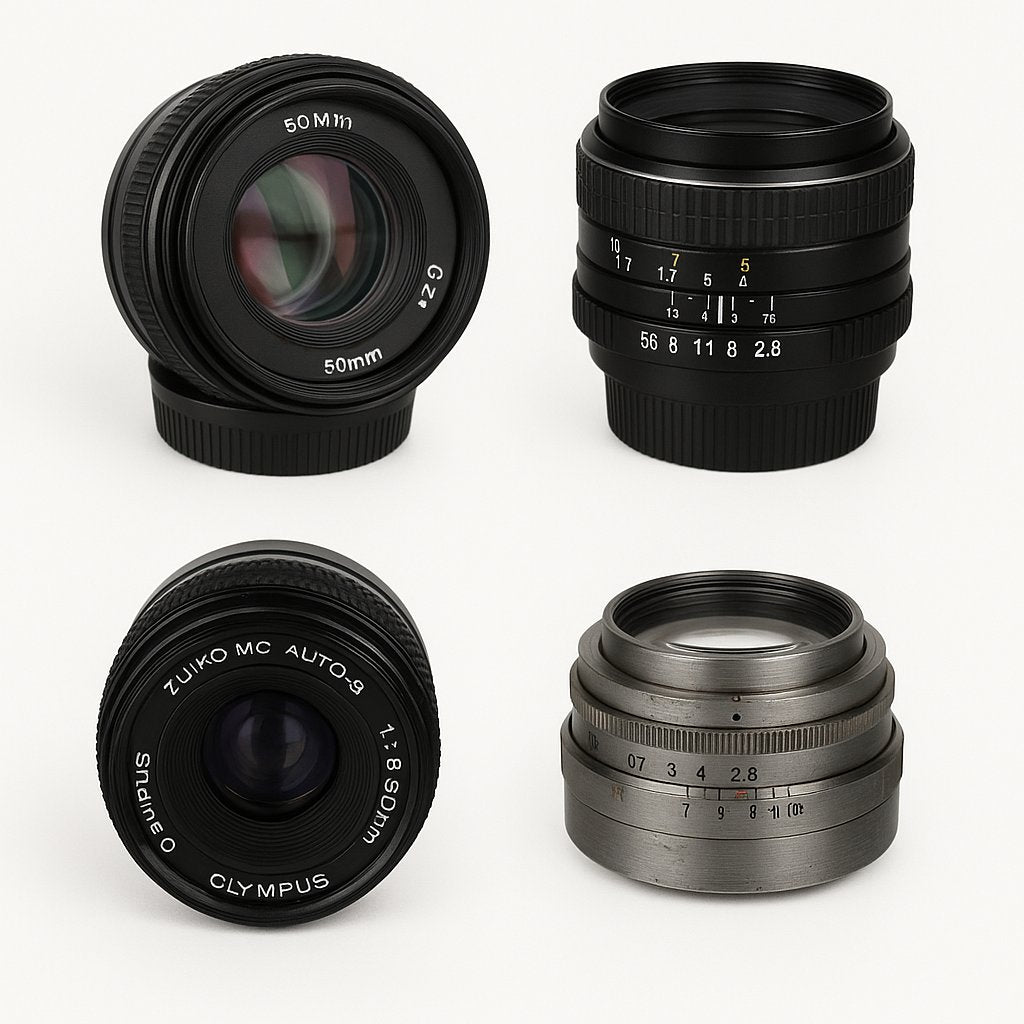
The example photographed here carries an F.Zuiko Auto-S 50mm f/1.8, one of two standard lenses named in the original manual. With a pentaprism finder, a match-needle meter and a cloth shutter, it is a fully manual camera, so every exposure decision stays with you.

A manual-focus SLR rewards a deliberate rhythm. You turn the focus ring until the image settles, line up the needle in the finder, and only then release the shutter.
Design Roots and Historical Background
A camera with a short shelf life
Olympus brought the FTL out in 1971. Within about a year the company showed the OM-1 at Photokina in 1972, a new system that pushed the FTL into the background almost immediately.
According to a former Olympus designer, the FTL was never meant as the long-term plan. He described it as a stopgap for the international market, produced under pressure from the sales department.
Metering on a screw-mount body
What sets the FTL apart is its metering. It is documented as the first 42mm screw-mount camera to measure light through the lens with the aperture wide open. The lens mount carries a pin that connects the lens to the camera for this purpose, so it pays to seat the lens carefully.

Key Technical Highlights
Shutter and viewfinder
The shutter is a cloth focal-plane design offering 1 s to 1/1000 s plus B for long exposures. A built-in self-timer runs for about 10 s, and flash synchronisation is available for X and FP. Through the pentaprism finder you see a microprism spot on a Fresnel screen, which helps with quick focusing, and the magnification is 0.92x with the 50mm lens.
Metering and lenses
Exposure is set with a match-needle display inside the finder. The CdS cells cover EV3 to EV18, measured at ASA 100 with an f/1.8 lens, and the camera accepts film speeds from ASA 25 up to 2000. The two standard lenses were the F.Zuiko Auto-S 50mm f/1.8 and the G.Zuiko Auto-S 50mm f/1.4. Their aperture rings have no click stops.
- Mount: 42mm screw thread (M42)
- Shutter: cloth focal plane, 1 to 1/1000 s plus B
- Meter: full-aperture TTL, match needle, EV3 to EV18
- Film speed range: ASA 25 to 2000
- Filter size on the 50mm lens: 49mm screw-in
Modern-Day Use in 2026
Where the FTL excels
The FTL suits photographers who want a manual SLR with a meter they can double-check against their own judgement. It shows the relationship between aperture, shutter speed and film speed in a very direct way.
Use it for:
- Learning manual exposure on 35mm film
- Portraits and everyday scenes with the 50mm f/1.8
- Collecting a short-lived Olympus model
- Trying M42 lenses on a body that meters at full aperture
Practical shooting tips
- Compare the needle with a handheld meter or a scene you know well when you shoot your first roll.
- Check the aperture scale before every frame, because the ring has no clicks to count.
- Use the microprism spot for quick focusing and confirm with the ground glass around it.
Buying and Maintenance Guide
What to check before buying used
A film SLR of this age deserves a careful look, so test each function in good light and take your time.
- Fire the shutter at every speed and listen for steady, even sounds.
- Open the back and inspect the light seals for crumbling or stickiness.
- Look through the lens and finder for haze, fungus, dust or separation.
- Test the match-needle meter with a fresh cell and compare it with a known reading.
- Try the self-timer and the lens release button.
Turn the focus and aperture rings slowly and feel for grit or stiffness.
Power and batteries
The camera was designed around a 1.3 V mercury battery, listed in the manual as an Eveready E625, Mallory RM-625R or GE No.625 or equivalent, together with a battery checker. Without it the meter stays dead.
- Find a modern replacement cell that suits your meter before you start shooting.
- Remove the cell when the camera is stored for a long time.
- Keep the battery contacts clean and free of corrosion.
Basic care and accessories
- A padded strap and a protective case for travel
- A lens cap and a 49mm filter to protect the front element
- A blower and microfiber cloth for glass and body
- Browse more photography accessories to complete your kit
What to pay
On European marketplaces such as eBay, working examples are typically listed around €105–€175. That range is drawn from a mix of complete cameras, with bodies and lens kits side by side, so treat it as a guide rather than a fixed price.
Conclusion: A Short Chapter Worth Knowing
The Olympus FTL pairs the screw-mount lens world with through-the-lens metering at full aperture. Its time in the catalogue was brief, and that gives it a particular charm for anyone who enjoys the stories behind old cameras.
With a 50mm f/1.8 on the front, it is a compact way into manual-focus film photography. Check the seals, the meter and the glass, and a good example can keep working for you. You may also enjoy our guide to the Olympus IS-100S.
FAQs
Does the Olympus FTL use a bayonet mount? No. Lenses screw onto a 42mm thread, the M42 mount.
What shutter speeds does the FTL offer? The cloth focal-plane shutter runs from 1 to 1/1000 s, plus B.
Does the FTL meter work without a battery? No. The meter needs its 1.3 V cell, and the manual names the E625 and RM-625R types.
Which lenses were the standard choice? The F.Zuiko Auto-S 50mm f/1.8 and the G.Zuiko Auto-S 50mm f/1.4.
Where can I find the Olympus FTL manual? The original instruction manual is available as a free PDF download on this page, under the first photo.
Ready to explore cameras like the FTL? Browse our analog cameras, see more SLR film cameras or discover the Olympus range at DutchThrift.com.
Sources: the original Olympus FTL instruction manual; Olympus FTL on camera-wiki.org, text licensed under GFDL 1.3; price range based on recent eBay listings in Europe.