



Introduction: The Instax Wide 300 at a Glance
The Fujifilm Instax Wide 300 is an instant camera built around Instax Wide film. Each exposure produces a print with a 62 x 99 mm image area. Everything is automatic: you frame, choose a focus zone, and press the shutter.
Instead of a stack of menus, the camera offers a handful of physical controls. A motorised focus switch, a Lighten-Darken control for exposure and a flash mode are about all there is to learn. That makes it a friendly device for a party, a family trip or a first taste of shooting on film.

Instant cameras reward patience and a bit of planning. Because every frame is a physical print that cannot be edited afterwards, people tend to look at the scene more carefully before pressing the button.
Design Roots and Historical Background
Sorting out the wide-format family names
Fujifilm sold its earlier wide-format cameras as the Instax 100, 200 and 210. The Wide 300 came after them and put "Instax Wide" on the camera for the first time, reaching buyers in late 2014.
Anyone browsing used instant cameras may therefore meet all of these model names. They share the wide film format, so it is worth confirming exactly which model you are looking at before you buy film or accessories.
A change of look
Fujifilm's FinePix X100 is the reference point for the nostalgic styling of the Wide 300. Next to the soft, rounded contours of the Instax 200 series, the body marks a clear change of direction, and it suits a camera you are happy to carry around.
One mechanical detail is worth knowing: after exposure, a motor-driven system pushes the print out through the top of the camera.

Key Technical Highlights
Lens, viewfinder and focusing
The retractable lens has a focal length of 95 mm at f/14, built from two elements in two groups. The viewfinder is a real-image type with 0.37x magnification and a target spot that helps you aim at close subjects.
Focusing is not continuous. A motor switches between two ranges: 0.9–3 m and 3 m to infinity. The package includes a close-up lens. According to camera-wiki, using it together with the 0.9–3 m setting lets you work from about 40–50 cm.
Shutter, exposure and flash
A programmed electronic shutter covers 1/64 to 1/200 s. Exposure is automatic for ISO 800 film between LV 10.5 and LV 15, and the Lighten-Darken control shifts the result by up to 2/3 EV either way. The built-in automatic flash has an effective range of 0.9–3 m and offers a fill-in mode for backlit subjects.
- Film: Instax Wide, 62 x 99 mm image size
- Lens: 95 mm, f/14, retractable, with close-up lens included
- Shutter: programmed electronic, 1/64–1/200 s
- Flash: automatic, 0.9–3 m, with fill-in mode
- Size and weight: 168 x 96 x 121 mm, 612 g without batteries, strap, film or close-up lens
Modern-Day Use in 2026
Where the Wide 300 excels
The camera shines wherever a large, tangible print matters more than technical control. The wide frame suits groups and settings, and the tripod socket opens up steadier shots.
Use it for:
- Group photos at gatherings and events
- Guest books, scrapbooks and wall displays
- Travel scenes and landscapes with a wide field of view
- Close-up portraits and small objects with the close-up lens
Practical shooting tips
- Pick the right focus zone before every shot; a wrong setting is a common cause of soft prints.
- Use the fill-in flash mode when the subject is lit from behind.
- Lighten a print a little for dark scenes and darken it for bright, snowy or sunny ones.
- Place the camera on a tripod for steadier framing indoors.
Buying and Maintenance Guide
What to check before buying used
A second-hand instant camera is simple to inspect if you know where to look. Work through this checklist:
- Look at the lens for scratches, dust and haze.
- Extend and retract the lens to see that it moves smoothly.
- Open the film compartment and check the light seal and rollers for dirt or damage.
- Fire the flash and confirm that it charges and goes off.
- Switch between both focus zones and listen for the motor.
- Test the viewfinder for dust or cloudiness.
If possible, load a film pack and take a test shot to confirm that the print ejects and develops evenly.
Power and batteries
The Wide 300 runs on four AA alkaline batteries, which should be good for about 10 film packs.
- Insert all four batteries of the same brand and age.
- Replace the full set together when the camera slows down.
- Remove the batteries if you will not use the camera for a long time.
Basic care and accessories
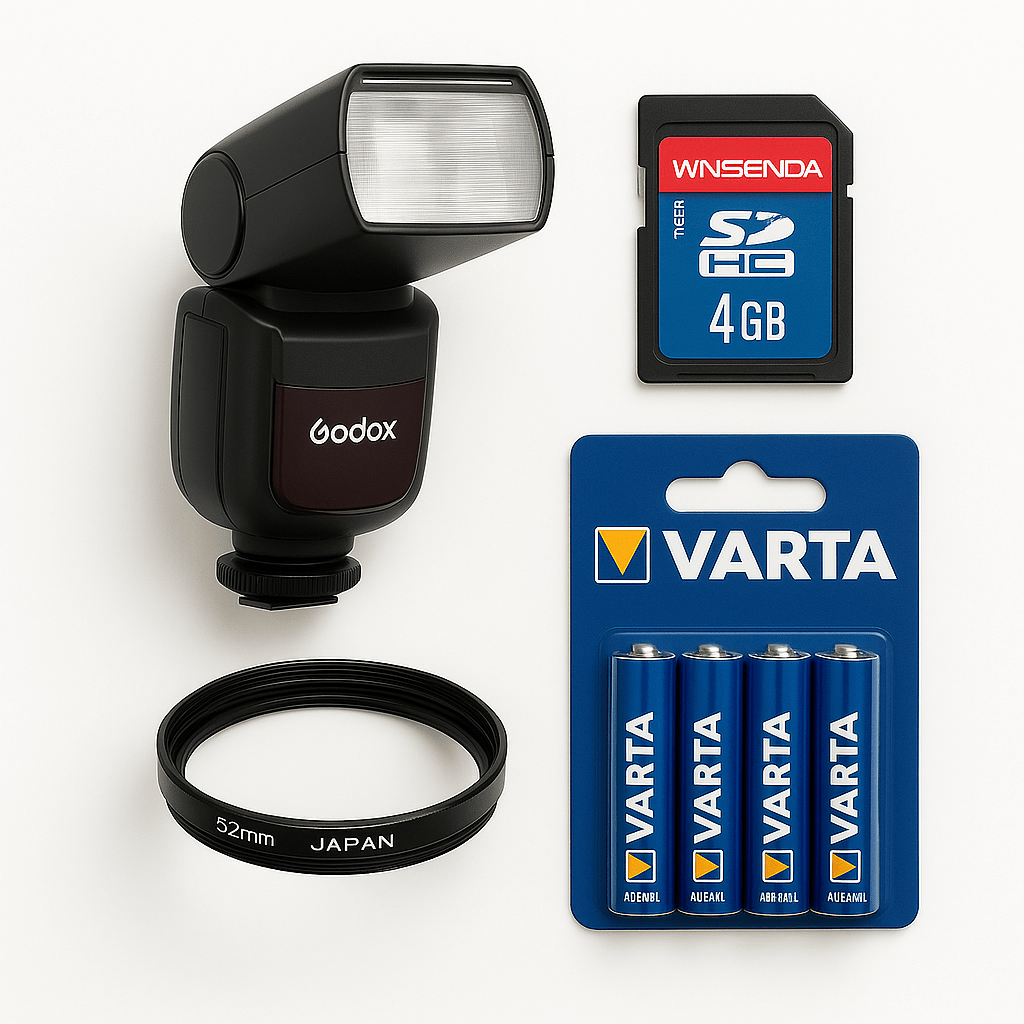
A few simple photography accessories keep the camera in good condition:
- A padded bag or case to protect the lens and viewfinder window.
- A microfibre cloth and a blower for the lens and viewfinder.
- Spare AA batteries and fresh Instax Wide film.
- A small tripod that fits the tripod socket.
Conclusion: Big Instant Prints, Simple Controls
The Fujifilm Instax Wide 300 keeps instant photography uncomplicated. Two focus zones, an automatic exposure range, a fill-in flash and a close-up lens cover most everyday situations, and the large 62 x 99 mm image gives every print more presence.
Its retro styling, AA power supply and straightforward handling make it an easy camera to recommend to anyone who wants a physical print in seconds. Check the condition carefully and use fresh film, and a used example can keep making prints for a long time.
FAQs
What film does the Fujifilm Instax Wide 300 use? It uses Instax Wide film, which gives an image size of 62 x 99 mm.
What is the closest focusing distance? The normal range starts at 0.9 m. With the supplied close-up lens and the 0.9–3 m setting, camera-wiki notes that you can shoot from about 40–50 cm.
What batteries does the Instax Wide 300 need? Four AA alkaline batteries. They are enough for roughly 10 film packs.
Does it have a flash? Yes. The built-in automatic flash works from 0.9 to 3 m and includes a fill-in mode.
Where can I find the Instax Wide 300 manual? The original instruction manual is available as a free PDF download on this page, under the first photo.
Ready to explore cameras like the Instax Wide 300? Browse our instant cameras, discover more analog cameras, and add some photography accessories at DutchThrift.com.
Sources: the original Fujifilm Instax Wide 300 instruction manual; Fujifilm Instax Wide 300 on camera-wiki.org, text licensed under GFDL 1.3.