



Introduction: The Canon T70 at a Glance
The Canon T70 is a heavily automated 35mm SLR from the mid-1980s. Its large LCD panel and touch keys set the tone for how you use it. If you are browsing our SLR film cameras, it is an electronic body that suits a photographer who likes to let the camera help with exposure.
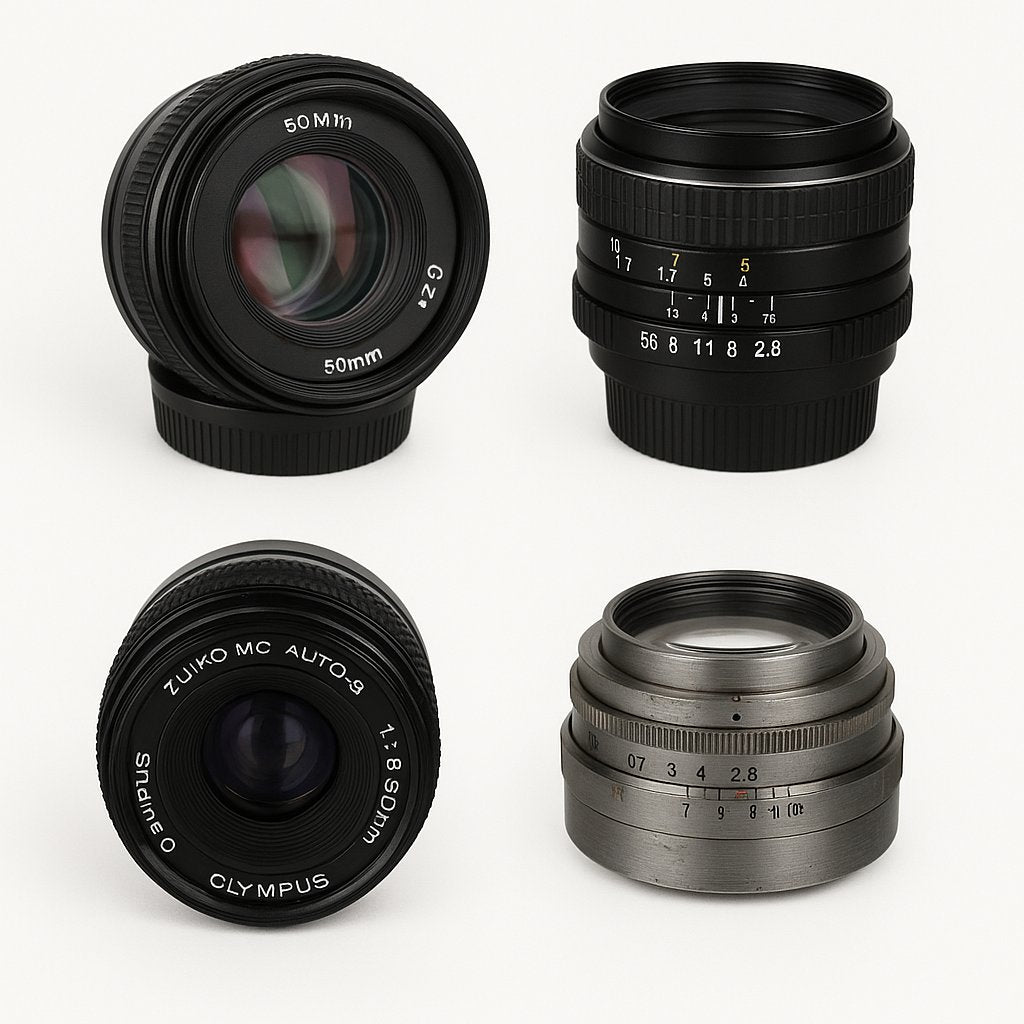
This guide looks at a T70 paired with a Canon FD 135mm f/3.5 lens. A 135mm focal length is a classic short telephoto, so the combination works well for portraits, details and subjects you would rather not crowd.

Shooting a program-controlled SLR tends to shift your attention from settings to composition. With a telephoto lens attached, many photographers also start to notice backgrounds and edges of the frame more than they did with a standard lens.
Design Roots and Historical Background
A new arrival in the T-series
Canon introduced the T70 in April 1984. It followed the first model of the T-series and became the line's second body. At launch, buyers could take it home with a zoom as the kit lens, either an FD 28-55mm f/3.5-4.5 or an FD 35-70mm f/3.5-4.5.
The camera was noticed straight away. During 1984 it was honoured with a Good Design Award and with the title of European Camera of the Year.
An LCD that left its mark
The big LCD panel and the touch-sensitive keys were the T70's headline features, and they proved influential for 35mm SLRs designed in the years afterwards.
Film advance is automatic. A built-in motor winds on after every frame and also makes continuous shooting possible.

Key Technical Highlights
Shutter and exposure
Timing is handled by an electronic shutter whose blades travel vertically across the film plane. It covers everything from 2 s up to 1/1000 s. For flash, the sync speed is 1/90 s.
Exposure can be left to the camera or taken over. The multi-program mode offers standard, tele and wide programs. You can also pick shutter-priority AE, which includes a safety shift function, shoot fully manually, or use AE with stopped-down metering.
Metering and film speed
Two measuring patterns are available: an average reading that gives extra weight to the centre of the frame, and a partial reading taken at the centre. Film speed runs from ISO 12 to ISO 1600 in 1/3-stop steps, and the chosen value appears on the LCD panel.
Viewfinder, lenses and flash
The fixed pentaprism finder shows 92% of the picture area and has 0.85x magnification when a 50mm standard lens is focused at infinity. Canon FD lenses are metered at full aperture. Lenses from other systems can be fitted too, but they only work with stopped-down metering.
For automatic program flash exposure, Canon pairs the camera with the Speedlite 277T. An electronic self-timer with a delay of approximately 10 seconds is built in. The body measures 151 x 89.2 x 48.4 mm and weighs 530 g without a lens.
- Shutter: electronic, 2 s to 1/1000 s, flash sync 1/90 s
- Modes: multi-program AE, shutter-priority AE, manual, stopped-down AE
- Film speed: ISO 12 to 1600 in 1/3 steps
- Viewfinder: pentaprism, 92% coverage, 0.85x
- Power: two AA batteries (3V)
- Weight: 530 g, body only
Modern-Day Use in 2026
Where the T70 excels
The T70 suits you when you want a film SLR that handles exposure for you but still lets you step in.
Use it for:
- Portraits and head-and-shoulders shots with a short telephoto view.
- Everyday walks, where the built-in motor keeps the film moving.
- Trying out other Canon FD lenses on one body.
Practical shooting tips
- Choose a shutter speed that suits the focal length. With a 135mm lens, a fast speed helps avoid camera shake.
- Set the film speed to match the roll, and check it on the LCD.
- Carry spare AA batteries, since the camera depends on them.
Buying and Maintenance Guide
What to check before buying used
A T70 is an electronic camera from the 1980s, so most checks come down to a short list of parts that age.
- Fire the shutter at several speeds and listen for an even, consistent sound.
- Check that the LCD panel is complete and readable, with no missing segments.
- Inspect the light seals and mirror foam for wear.
- Look through the viewfinder for dust, haze or marks on the prism.
- Confirm that the film motor runs and that the touch keys respond.
Also check the 135mm lens for haze, fungus and scratches.
Power and batteries
The T70 runs on two AA batteries (3V).
- Use fresh, matching batteries from the same pack.
- Remove the batteries when you store the camera for a long time.
- Keep spares in your bag on long days.
Basic care and accessories
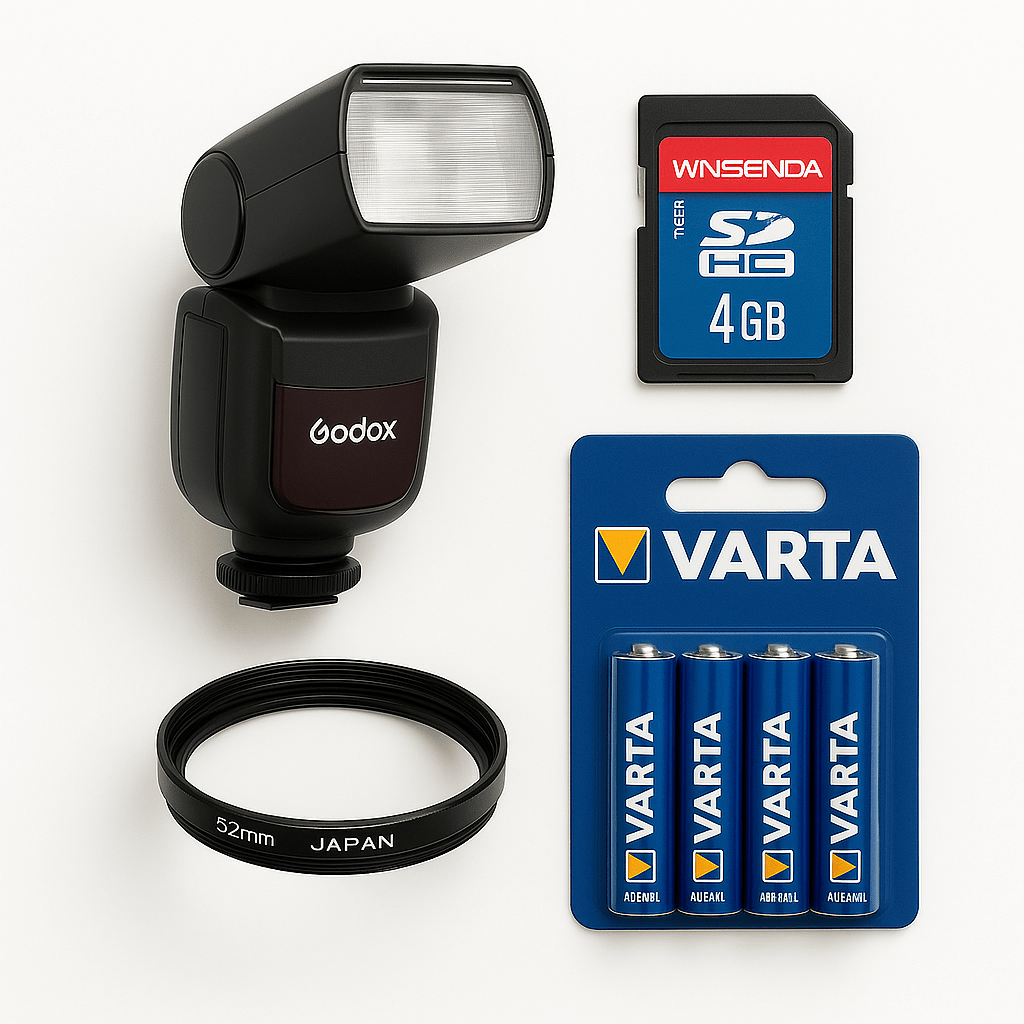
A few simple photography accessories will keep the T70 in good shape:
- A padded camera bag to protect the body and lens from knocks.
- A soft cloth and a blower for dust on the lens and viewfinder.
- Lens caps for both ends of the 135mm lens.
- A Speedlite 277T if you want automatic program flash exposure.
What to pay
At DutchThrift, recent sold T70 kits with an FD lens went for about €99-€119.
Conclusion: Simple Controls, Smart Exposure
The Canon T70 brings together an LCD-led layout, a built-in film motor and a flexible multi-program exposure system. It arrived in 1984 with a modern look, and many later SLRs followed that direction.
Paired with an FD 135mm f/3.5, it becomes a handy setup for portraits and distant subjects. Check the shutter, LCD and light seals, put fresh AA batteries in, and it is ready for another roll.
FAQs
When was the Canon T70 released? Canon released the T70 in April 1984 as the second body of its T-series.
What batteries does the Canon T70 use? It uses two AA batteries (3V).
Which lenses fit the Canon T70? Canon FD lenses work with full-aperture metering. Non-FD lenses can be used with stopped-down metering only.
What shutter speeds does the T70 offer? The electronic shutter runs from 2 s to 1/1000 s, with a flash sync speed of 1/90 s.
Where can I find the Canon T70 manual? The original instruction manual is available as a free PDF download on this page, under the first photo.
Ready to explore cameras like the Canon T70? Browse our SLR film cameras, discover more analog cameras, or see everything from Canon at DutchThrift.com.
Sources: Canon T70 instruction manual (PDF); Canon T70 on camera-wiki.org, text licensed under GFDL 1.3; the price range is based on recent DutchThrift sales.