



Introduction: The Photura at a Glance
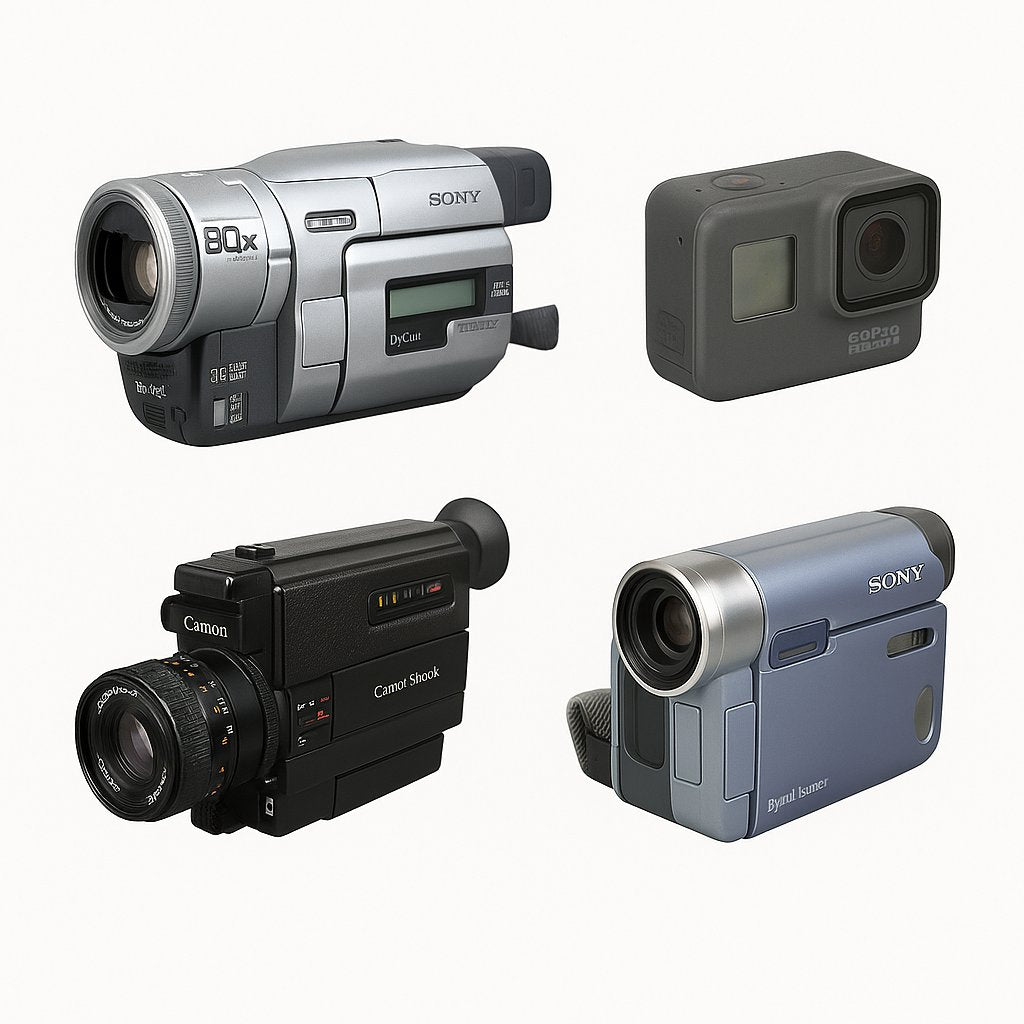
Few film cameras are as easy to recognise as the Canon Photura. Released in 1990, it is a point-and-shoot loaded with 35mm film, yet its shape is closer to a video camera. If you enjoy browsing analog cameras for the unusual ones, this model deserves a look.
Behind the odd shape sits a simple recipe: a built-in 35-105mm zoom, autofocus, automatic exposure and a built-in flash. Canon sold it in Europe as the Epoca and in Japan as the Autoboy Jet, so you may meet it under any of those three names.

Cameras that break the usual mould tend to make people slow down. A body held like a camcorder invites a different stance, and that can change how a picture gets framed.
Design Roots and Historical Background
A Sure Shot that looks like a camcorder
Canon filed the Photura under its very popular Sure Shot range, the family of autofocus compacts that also includes the Canon Sure Shot 115U. The Photura went its own way with a body shaped like a video camera.
Camera-wiki calls it Canon's answer to the bridge-camera market segment, so the unusual styling was a deliberate choice.
From Photura to Photura 135
Canon followed up in 1992 with the Photura 135, which carries a longer 38-135mm lens. That later camera is covered in our Canon Epoca 135 article. This page is about the earlier 1990 model with the 35-105mm lens, so keep the two apart when you read listings.
Key Technical Highlights
Lens and focusing
The built-in zoom runs from 35mm to 105mm with a maximum aperture of f/2.8 at the wide end and f/6.6 at full telephoto. It has ten elements in nine groups and is driven by a power zoom lever. Autofocus uses an evaluative active system with a single focusing spot, and there is an infinity mode for distant scenes. The closest focusing distance is 0.8 m.
Exposure, film and flash
The camera is a program-automatic design with three-zone metering. A +1 stop automatic correction exists for backlit scenes. Shutter speeds run from 2 s to 1/250 s, and the film speed is read from the DX code on the cartridge anywhere between ISO 25 and 3200. The built-in zoom flash has red-eye reduction, a guide number of up to 25 (ISO 100, metres) and a recycling time of about 2.5 seconds.
Film transport and body
Film advances automatically, either one frame at a time or continuously at about one frame per second. The body measures roughly 99.5 x 73.5 x 155.5 mm and weighs 600 g without battery.
- Lens: 35-105mm f/2.8-6.6, ten elements in nine groups
- Focus: active autofocus, single spot, infinity mode, from 0.8 m
- Shutter: 2 s to 1/250 s with program exposure
- Film speed: ISO 25-3200 by DX code
- Flash: built-in zoom flash with red-eye reduction
- Weight: 600 g without battery, 640 g with battery
Modern-Day Use in 2026
Where the Photura excels
The 35-105mm range covers wide scenes, portraits and moderate reach, and automatic exposure lets you concentrate on the subject. The wide ISO range also gives you freedom in film choice.
Use it for:
- Casual travel pictures with one zoom and no lens changes
- Portraits and group shots using the flash and red-eye reduction
- Street photos where the unusual body draws curious looks
- Continuous shooting at about one frame per second
Practical shooting tips
- Stay at least 0.8 m from your subject, the closest focusing distance.
- Use the backlight correction when the sun is behind your subject.
- Choose a faster film for dim rooms, since the lens gets slower as you zoom in.
- Hold the body with both hands and keep your fingers clear of the lens and flash.
Buying and Maintenance Guide
What to check before buying used
A camera from 1990 has had decades to age, so inspection matters more than looks. Work through this list:
- Open the film door and look for crumbling or sticky light-seal foam
- Run the power zoom from end to end and listen for hesitation or grinding
- Look through the lens for haze, fungus or dust between the elements
- Raise the flash, fire it and check that it recycles
- Fire the shutter and confirm the film advance responds
If you can, test with a cheap roll and check the first prints for light leaks, uneven exposure or soft focus.
Power and batteries
The Photura needs one 6V 2CR5 lithium battery. It is less common than AA cells, so keep a spare for trips. Some habits help:
- Fit a fresh battery before every important roll
- Take the battery out if the camera will sit unused for months
- Check the contacts for dirt and wipe them gently with a dry cloth
Basic care and accessories
- Store the camera in a padded case to protect the lens
- Clean the lens with a blower and a microfibre cloth rather than your sleeve
- Keep it in a dry place to discourage fungus
You can find bags, cloths and more in our photography accessories collection.
Conclusion: A Compact With a Camcorder Face
The Canon Photura is a curious piece of early-nineties camera design. Under the video-camera styling it is an easygoing autofocus compact with a zoom, program exposure and a built-in flash.
If you want a distinctive, simple 35mm camera and you are happy to inspect it carefully before buying, the Photura is a fun and approachable option.
FAQs
What is the Canon Photura? It is a 1990 autofocus 35mm compact from Canon's Sure Shot range, shaped more like a video camera than a conventional camera.
Is the Photura the same as the Canon Epoca? Yes. Canon sold the camera as the Epoca in Europe and as the Autoboy Jet in Japan.
Which battery does the Canon Photura use? It uses one 6V 2CR5 lithium battery.
What film speeds does it support? It reads the DX code on the cartridge and sets the speed automatically between ISO 25 and 3200.
Where can I find the Photura manual? The original instruction manual is available as a free PDF download on this page, under the first photo.
Ready to explore cameras like the Photura? Browse our analog cameras and the full range of Canon cameras at DutchThrift.com.
Sources: the original Canon Photura instruction manual (PDF) and Canon Photura/Epoca/Autoboy Jet on camera-wiki.org, text licensed under GFDL 1.3.