



A Brief History of the Nikon EL-Nikkor 50mm f/4
From darkrooms to digital workflows
The Nikon EL-Nikkor 50mm f/4 was designed as a professional enlarger lens, built to project razor-sharp negatives onto photographic paper in the darkroom. For decades, it sat under enlargers in labs, studios, and schools, quietly doing precise work that few photographers ever thought about.
Unlike typical taking lenses, enlarger lenses like the EL-Nikkor were optimized for flat-field sharpness, low distortion, and consistent contrast across the entire frame. When film ruled the world, this meant crisp prints at common enlarging sizes from 35mm negatives.
A surprising new life on digital cameras
I first tried a vintage darkroom lens on a digital camera more out of curiosity than expectation. The surprise came when I zoomed into the file: the detail, micro-contrast, and neutrality looked more like a high-end macro lens than a decades-old relic. That moment turned darkroom optics into one of my favorite creative tools.
As digital cameras evolved and adapters became widely available, photographers rediscovered lenses like the EL-Nikkor 50mm f/4. What was once bolted to enlargers now finds its way onto mirrorless bodies for macro work, digitizing film, and experimental fine art projects.

Technical Highlights and Optical Design
Flat-field precision and neutral rendering
The EL-Nikkor 50mm f/4 typically features a multi-element design optimized for even sharpness from center to corner. Because it was built for enlarging flat negatives, the lens excels at flat-field reproduction, making it perfect for scanning film, copying artwork, or photographing documents.
Color rendition is intentionally neutral and contrast is controlled, so fine details and tonal gradations are preserved. Distortion is minimal, an essential trait when lines need to remain straight in prints and copy work.
Manual aperture and simple mechanics
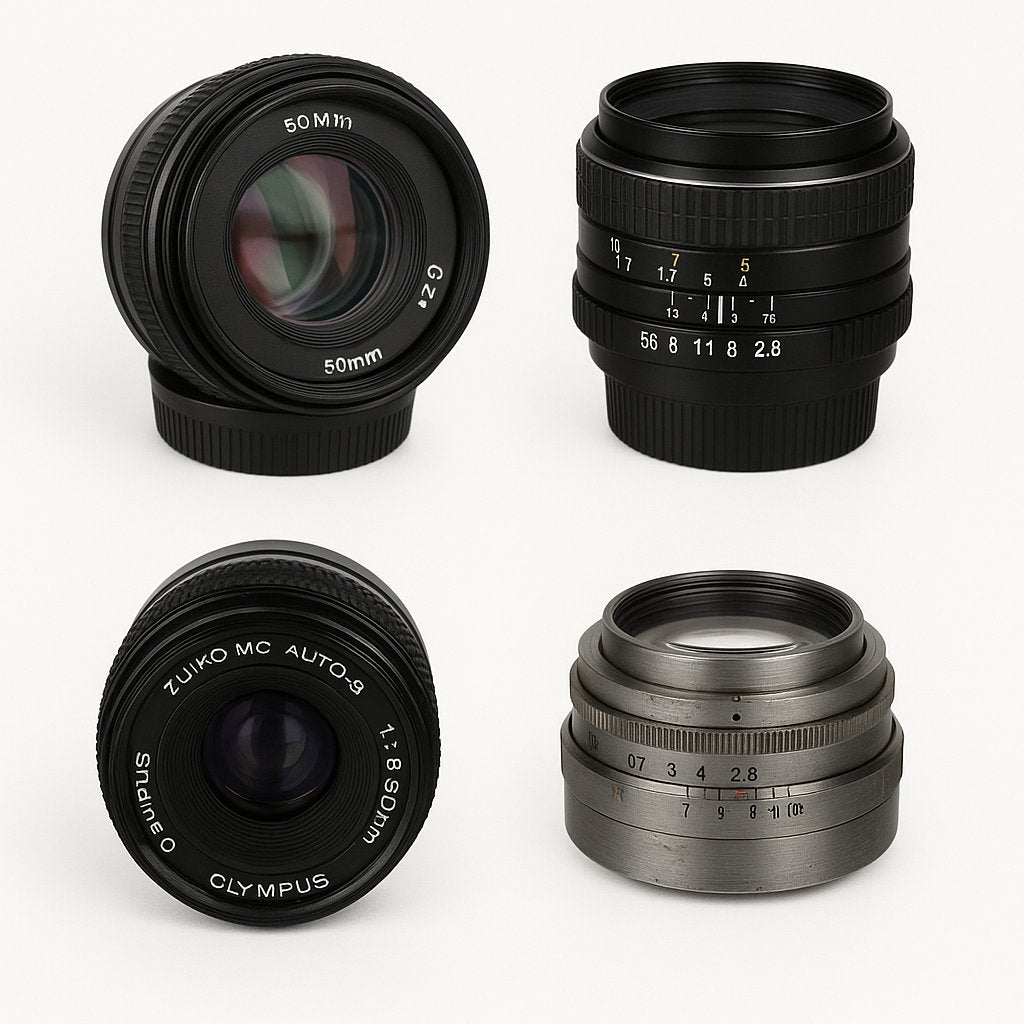
As an enlarger lens, the EL-Nikkor 50mm f/4 has no autofocus, no electronics, and no built-in focusing helicoid. You set the aperture on the manual ring, and focusing is handled by the enlarger stage—or on digital, by bellows or a helicoid adapter.
This simplicity makes the lens durable and compact. Fewer moving parts also mean fewer failure points, a plus when you are buying second-hand gear and want something that will keep working for years.

Modern Creative Uses for the EL-Nikkor 50mm f/4
Adapting the lens to digital bodies
The EL-Nikkor 50mm f/4 usually comes with an M39 enlarger thread, which can be adapted to many modern systems:
- ✅ Mount via M39-to-camera adapter (F, E, EF, or Z).
- ✅ Use bellows or helicoid adapter for focusing.
- ✅ Calibrate lighting for even sharpness across frame.
- ✅ Test aperture function and check glass condition before use.
On mirrorless cameras, the short flange distance makes adapting particularly straightforward. Combined with macro bellows or a helicoid, you gain precise control over magnification and focus distance.
Macro, digitization, and fine art
Where the EL-Nikkor 50mm f/4 truly shines is close-up and reproduction work. Its strengths translate directly into modern creative uses:
- Macro photography of textures, plants, and small objects.
- Digitizing 35mm negatives and slides with a consistent, flat field.
- Copying prints, illustrations, or delicate archival materials.
- Fine art projects where neutrality and edge-to-edge clarity matter.
Many photographers pair the EL-Nikkor with their favorite analog cameras for hybrid workflows: shoot film, then digitize the negatives with the same lens on a digital body.
Buying a Second-Hand EL-Nikkor 50mm f/4
What to look for in a used copy
Because enlarger lenses often lived in controlled lab environments, many second-hand EL-Nikkor 50mm f/4 examples have aged gracefully. Still, condition matters when you are chasing maximum sharpness.
- 🔎 Check the aperture ring for smooth movement.
- 🧼 Shine light through front and rear elements to inspect for fungus.
- 📦 Seek boxed or well-stored examples.
- 💡 Verify no coating separation or major blemishes.
Minor internal dust is normal and rarely visible in real-world images, especially at macro distances. What you want to avoid are haze, large scratches, oil on the blades, or signs of separation between elements.
Pairing with sustainable, second-hand gear
One of the pleasures of a lens like the EL-Nikkor 50mm f/4 is how easily it fits into a sustainable kit. You can combine it with pre-loved camera lenses, sturdy macro bellows, and essential photography accessories to build a highly capable setup without buying anything new.
This approach not only saves budget; it also keeps excellent optical tools in circulation and out of storage boxes or landfill.
Why This Lens Still Matters
Affordable performance with character
Compared to modern macro lenses, the Nikon EL-Nikkor 50mm f/4 offers impressive optical performance at a fraction of the price. You give up autofocus and convenience, but in return you gain:
- Remarkable sharpness and flat-field performance.
- Compact size and low weight.
- Manual, tactile control that encourages slower, more deliberate photography.
- A sustainable way to tap into pro-grade optics.
A tool for thoughtful image-making
Adapting an enlarger lens like the EL-Nikkor slows you down in the best way. You adjust the bellows, set the aperture, refine the light, and only then press the shutter. This rhythm is the opposite of spray-and-pray, and it often shows in the final images.
For photographers who enjoy exploring gear with history, the Nikon EL-Nikkor 50mm f/4 offers a satisfying mix of heritage and utility—equally at home in a careful digitization setup or an experimental studio session.
FAQs
Can the Nikon EL-Nikkor 50mm f/4 be used on modern digital cameras? Yes. With an M39 adapter and extension bellows or a helicoid, the EL-Nikkor 50mm f/4 works beautifully on many digital systems. It is especially strong for macro photography, film digitization, and fine art reproduction.
What makes the EL-Nikkor 50mm f/4 special compared to modern macro lenses? The lens offers exceptional sharpness, neutrality, and flat-field performance while remaining very affordable on the second-hand market. It lacks autofocus and built-in focusing, so it is slower to use but optically competitive.
How do I check the condition of a second-hand EL-Nikkor 50mm f/4? Inspect the glass under strong light to ensure it is clear, with no fungus, haze, or element separation. Test the aperture ring for smooth movement and confirm the blades open and close cleanly. Small dust specks are common and usually harmless.
What accessories work best with this lens? The EL-Nikkor pairs well with macro bellows such as Nikon PB-4 or PB-6, M39-to-camera adapters, and macro focusing rails. Stable tripods, copy stands, and diffused lighting will help you get the most consistent results.
Ready to explore what a classic enlarger lens can do for your photography? Browse our carefully curated second-hand camera lenses, analog cameras, and essential photography accessories to build a sustainable, creative kit around the Nikon EL-Nikkor 50mm f/4.