



A Short History of the Rollei 135mm f/2.8 QBM Lens
The Rollei 135mm f/2.8 QBM lens comes from the era when Rollei was pushing hard into the 35mm SLR market, pairing its cameras with high‑quality optics that could compete with the best of Germany and Japan. Built for the QBM (Quick Bayonet Mount) system, this 135mm was designed as a versatile telephoto option balancing brightness, portability, and image quality.
Over time, versions were produced both in Germany and Singapore. While collectors sometimes favor the German‑made lenses, photographers value both for their reliable construction and pleasantly classic rendering. For many shooters today, the Rollei 135mm f/2.8 represents an accessible entry into vintage telephoto glass that still performs surprisingly well.
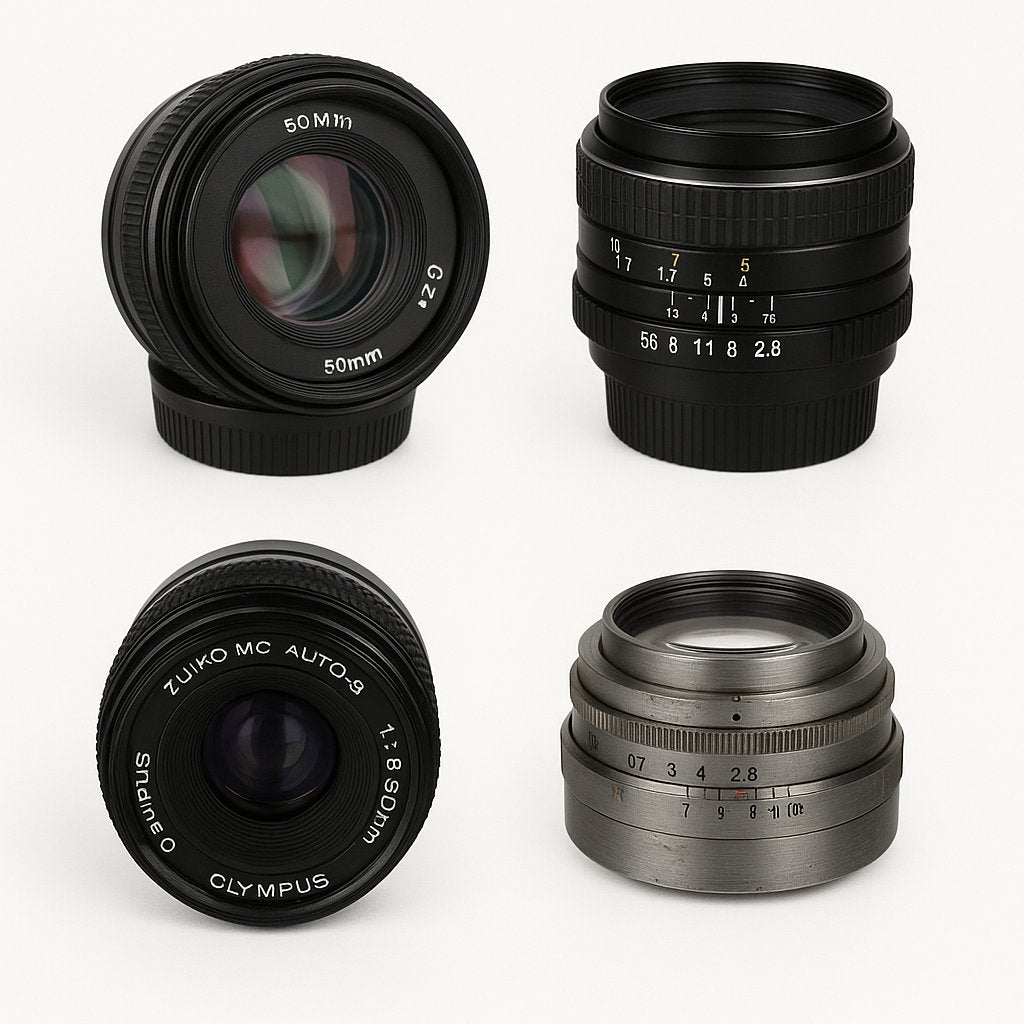
The first time you handle a vintage manual‑focus lens like this, the weight and smooth metal focusing ring are usually the biggest surprises—there’s a tactile precision that feels almost mechanical‑watch‑like compared to many modern plastic designs.
Key Technical Characteristics
Classic telephoto reach
At 135mm, this lens sits in the sweet spot between standard and long telephoto. On full frame it offers flattering compression for portraits and tight framing for details and distant scenes, while on APS‑C or Micro Four Thirds via adapter it becomes a powerful telephoto tool.
Fast f/2.8 aperture
The f/2.8 maximum aperture is bright enough for low‑light situations and for achieving subject isolation with pleasant background blur. Stopping down to f/4 or f/5.6 typically tightens up sharpness and contrast across the frame, giving you flexibility depending on your creative intent.
Manual focus and QBM mount
Built for the Rollei QBM system, the lens uses a bayonet mount and relies entirely on manual focus and manual aperture control. On digital cameras, this simplicity becomes an advantage: there’s very little to fail electronically, and the focusing feel is usually smoother than many modern autofocus lenses.

How It Performs Today on Digital and Film Cameras
On modern mirrorless cameras
Mounted via a simple QBM adapter, the Rollei 135mm f/2.8 feels right at home on Sony E, Canon RF, Fujifilm X, and Micro Four Thirds systems. You keep infinity focus and gain access to useful focus assists, which make manual focusing far more convenient than it used to be.
- ✅ Use focus peaking or magnification with mirrorless cameras.
- ✅ Attach a lens hood to reduce flare.
- ✅ Stop down to f/4 for enhanced sharpness.
- ✅ Experiment with neutral or daylight film stocks for balanced tones.
- ✅ Check focusing helicoid for stiffness or uneven movement.
- ✅ Test aperture for quick and clean operation.
- ✅ Inspect internal glass with a flashlight for haze or fungus.
- ✅ Verify mount compatibility before purchase.
Wide open at f/2.8, the lens often delivers a slightly softer, more atmospheric look—great for portraits, video, and creative work. Stopping down a notch tightens fine detail for more clinical rendering, making it suitable for nature and product shots as well.
On film cameras
Mounted on a native Rollei QBM body, the 135mm f/2.8 offers a classic telephoto experience: precise focusing, clear framing, and that timeless analog character. Neutral or daylight‑balanced film stocks pair especially well with this lens, delivering natural colors and smooth transitions from in‑focus to out‑of‑focus areas.

Buying a Rollei 135mm f/2.8 QBM Second-Hand
What to look for mechanically
When shopping for this lens used, start by checking the focus ring. It should travel smoothly from minimum focus to infinity without grinding, uneven resistance, or dead spots—signs that the helicoid grease may have dried out.
Next, test the aperture ring: it should click confidently at each stop, and the blades should open and close quickly and cleanly. Sticky blades or slow movement can affect exposure consistency, especially at faster shutter speeds.
Inspecting the optics
Use a small flashlight to look through the lens from both ends. Light dust is normal and rarely affects image quality. Haze or fungus, however, can reduce contrast or produce unwanted artifacts in bright scenes.
If you are buying online, look for clear, close‑up photos of the glass and aperture blades, and a detailed description of the lens’s cosmetic and functional condition.
Who Should Use This Lens and Why
Portrait and people photographers
The Rollei 135mm f/2.8 excels at flattering portraits. The focal length gently compresses features, and the fast aperture lets you blur backgrounds into a soft wash of color and light. For photographers who enjoy taking time to focus and compose, the manual experience adds a satisfying, deliberate rhythm to portrait sessions.
Nature, details, and cinematic video
For nature and detail‑oriented work, the 135mm focal length helps isolate textures, patterns, and distant subjects without needing to be physically close. Videographers will appreciate the smooth manual focusing and organic rendering, which can feel more “cinematic” than ultra‑sharp modern glass.
If you’re returning to analog photography, this lens is also a rewarding partner for film bodies, offering an authentic look that pairs perfectly with grain and classic emulsions.
Final Thoughts: The Enduring Appeal of the Rollei 135mm f/2.8
The Rollei 135mm f/2.8 QBM lens remains a compelling option for modern photographers who value both image quality and character. It delivers a look that feels timeless rather than clinical, with enough sharpness for serious work and enough personality to keep you inspired.
Combined with the affordability of the second‑hand market and the ease of adapting QBM lenses to today’s mirrorless systems, this telephoto gem offers a sustainable and creatively rewarding alternative to buying new. Whether you shoot portraits, nature, video, or analog, it’s a lens that invites you to slow down, focus by feel, and enjoy the craft of photography.
FAQs
Is the Rollei 135mm f/2.8 QBM compatible with modern digital cameras? Yes. With the right QBM adapter, you can mount it on Sony E, Canon RF, Fujifilm X, and Micro Four Thirds bodies while maintaining infinity focus and full manual control over focus and aperture.
What kind of photography suits the Rollei 135mm f/2.8 best? This lens is particularly strong for portraiture, nature details, and cinematic video work. It also shines in analog photography, where its authentic vintage rendering pairs beautifully with film.
What should I check when buying this lens used? Ensure the focusing ring travels smoothly, the optics are clean, and the aperture opens and closes quickly. Light internal dust or very mild haze is common in vintage glass and usually has minimal impact on real‑world performance.
Is the German-made version better than the Singapore-made one? German‑made lenses tend to hold higher collector value, but the Singapore versions generally offer very similar optical performance. For most photographers, condition matters more than origin.
Ready to explore vintage telephoto magic for yourself? Browse our pre‑loved camera lenses, pair one with our analog cameras, and build a sustainable, character‑rich kit with DutchThrift.