



A Brief History of the Olympus IS-1000
The Olympus IS-1000 arrived at a time when photographers wanted SLR image quality without the bulk and complexity of multiple lenses. Olympus responded with an “integrated SLR” concept: a 35mm film camera that housed a high-quality zoom, through-the-lens (TTL) metering, and autofocus inside a compact, unified body.
Instead of swapping lenses, users enjoyed a versatile zoom that covered everyday situations—from family photos to travel scenes—while still looking through a bright SLR-style viewfinder. The IS-1000 became a bridge between classic SLR film cameras and the ease of later compact zooms.

For many, this camera was their first taste of serious photography: autofocus, auto exposure, and a capable zoom lens meant fewer missed moments and more time composing the shot. Today, that same balance of control and simplicity makes the IS-1000 a charming entry point into film photography.
Key Technical Highlights
Integrated zoom lens and focusing
The defining feature of the Olympus IS-1000 is its integrated zoom lens, designed to cover most everyday focal lengths in one package. Paired with autofocus, it lets you react quickly to changing scenes, whether you are shooting portraits, street scenes, or travel landscapes.
Exposure modes and metering
The camera’s TTL metering handles exposure with surprising sophistication for an all-in-one film body. For day-to-day shooting, you can simply set it to Program Auto and let the camera handle shutter speed and aperture. More adventurous photographers can switch modes to gain additional creative control, including the ability to use spot metering for precise exposure of faces or backlit subjects.
Core shooting tips and setup checklist
To get the most from the IS-1000, especially when picking one up second-hand, keep these practical pointers in mind:
- Use ISO 400 film for flexible lighting.
- Set to Program Auto for everyday use.
- Try spot metering for dramatic contrast.
- Pair with an Olympus G40 or G50 flash indoors.
- Scan negatives for digital editing or social sharing.
- Test autofocus and zoom operation.
- Check lens for haze or fungus.
- Inspect light seals for deterioration.
- Confirm shutter and flash function.
- Ask for storage history — humidity causes damage.
How the Olympus IS-1000 Fits into 2025 Photography Workflows
Film shooting in a digital-first world
In 2025, most of us carry digital cameras in our pockets, yet film still holds a powerful appeal. The Olympus IS-1000 slips into a modern kit as a dedicated “experience” camera—something you bring on weekends, city walks, or travels to slow down and shoot more intentionally.
After years of shooting digital, my first roll through an all-in-one film camera like the IS-1000 felt oddly liberating. No menus, no instant chimping—just the soft whir of the zoom, the thunk of the shutter, and the anticipation of waiting for the lab to reveal whether my choices paid off.
Combining analog capture with digital sharing
Once your roll is developed, scanning the negatives creates an easy bridge to your digital life. High-resolution scans allow you to color-correct, retouch dust, and share your work on social platforms or in online portfolios, while still preserving that unmistakable analog character.
Many photographers now carry a digital body alongside a compact film camera, or pair an IS-1000 with other analog cameras for different looks. The IS-1000 shines when you want consistent results with minimal setup time.

Buying the Olympus IS-1000 Second-Hand
What to inspect before you commit
Second-hand cameras can offer incredible value, but condition matters. When evaluating an Olympus IS-1000, start with the glass: point the lens at a bright light and look for haze, fungus, or separation. A clean lens is essential for sharp, contrasty images.
With fresh CR123A batteries installed, power the camera up and:
- Listen to the autofocus—whirring is normal, grinding is not.
- Zoom from wide to telephoto to confirm smooth movement.
- Fire the shutter at different settings and watch for consistent operation.
- Open the film door and check the light seals for sticky residue or cracks.
- Test the built-in flash, if present, and any hot shoe or dedicated flash contacts.
Why buying used is a sustainable choice
Choosing an IS-1000 from a dedicated second-hand store helps keep classic gear in active use instead of in landfill. Every reused camera saves resources needed to build something new—and you gain a piece of photographic history with real character.
Recommended Accessories and Film Types
Films that complement the IS-1000
The IS-1000 pairs beautifully with versatile, forgiving films. For everyday shooting, ISO 200–400 color negative films offer good latitude if your exposure is slightly off. They work well in mixed lighting and are widely available.
If you enjoy classic monochrome, a stock like Ilford HP5 delivers rich tonality and enough speed for handheld shooting in lower light. For those who like punchy, vivid slides, Ektachrome is a great way to see what the IS-1000’s optics can really do—just remember slide film demands more precise exposure.
Flashes, straps, and small essentials
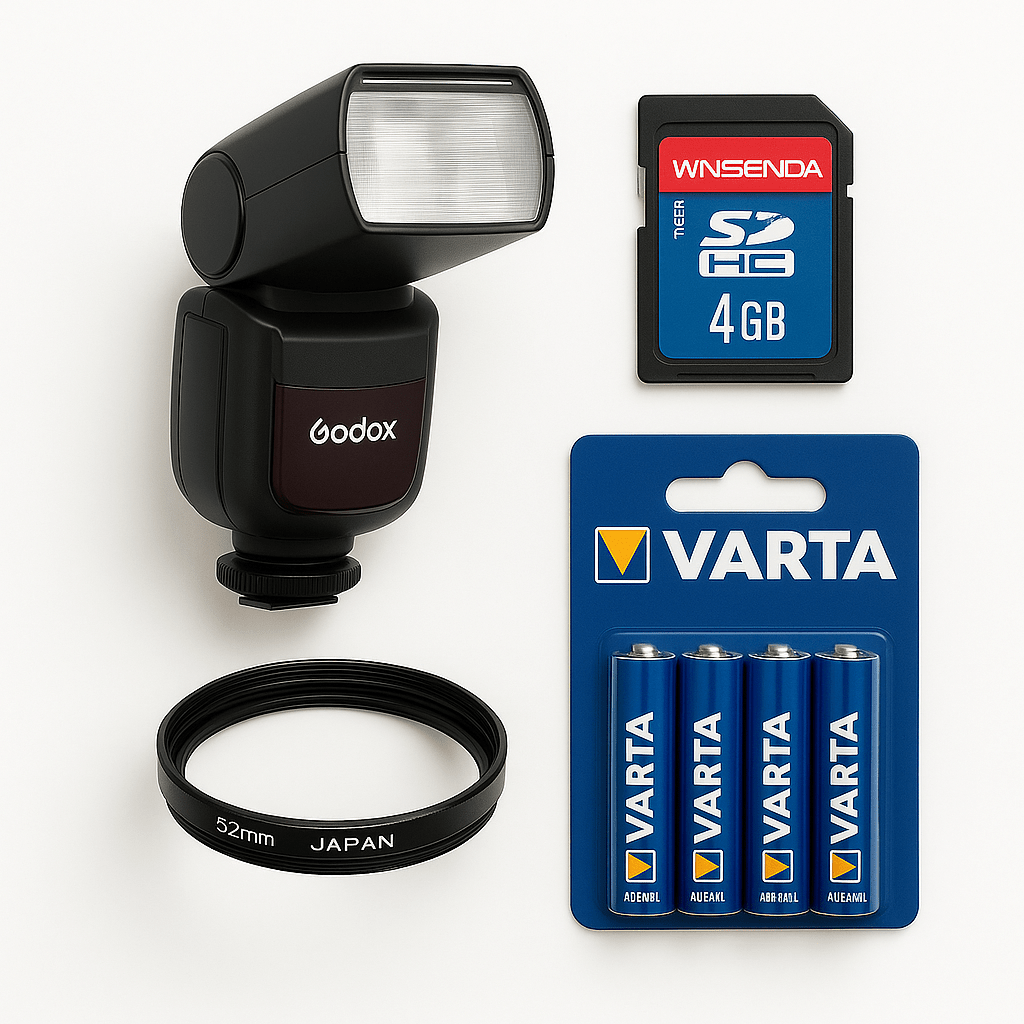
To get the most from indoor and evening photography, pair the camera with an Olympus G40 or G50 flash. These compatible units communicate reliably with the camera’s metering to provide balanced flash exposures.
A comfortable strap, lens-cap tether, and a small pouch for spare CR123A batteries round out a practical kit. Many of these items can be sourced sustainably through second-hand photography accessories.
Why the IS-1000 Deserves a Place in Modern Collections
A unique bridge camera with character
The Olympus IS-1000 sits in a fascinating niche: it is not a simple point-and-shoot, yet it avoids the complexity and cost of a multi-lens SLR system. That makes it ideal for photographers who like the look and feel of an optical viewfinder but prefer to travel light.
Collectors appreciate the IS-1000 as a snapshot of camera design history—an era when brands were experimenting with new form factors to make serious photography more approachable. Users appreciate it for something simpler: it is just fun to shoot.
For beginners, returners, and seasoned film fans
If you are new to film, the IS-1000 can be a forgiving teacher. If you are returning after years of digital, it provides a gentle reintroduction without demanding that you remember every exposure rule from day one. And if you are a seasoned film shooter, it offers a different pace from your usual interchangeable-lens bodies.
In a world dominated by high-resolution screens and infinite storage, a 36-exposure roll in a capable, compact camera like the Olympus IS-1000 can feel refreshingly focused—each frame a small, deliberate decision.
FAQs
Is the Olympus IS-1000 a good film camera for beginners? Yes. Its built-in zoom, TTL metering, and auto modes make it forgiving and easy to learn, requiring fewer technical adjustments than typical SLRs.
What films work best with the Olympus IS-1000? Use ISO 200–400 color negative film for general shooting, Ilford HP5 for black-and-white, or Ektachrome for vivid color slides.
What should I check before buying an IS-1000 second-hand? Inspect lens clarity, autofocus sound, film door seals, and verify smooth zoom operation; testing with fresh batteries is strongly recommended.
Does the Olympus IS-1000 require special batteries? It takes two CR123A lithium batteries, which are widely available in stores and online.
Ready to explore film again—or for the first time—with a capable all-in-one camera? Browse our curated selection of Olympus bodies, analog cameras, and sustainable second-hand gear at DutchThrift.com.