



The Nikon EL-Nikkor 50mm f/4: A Precision Classic
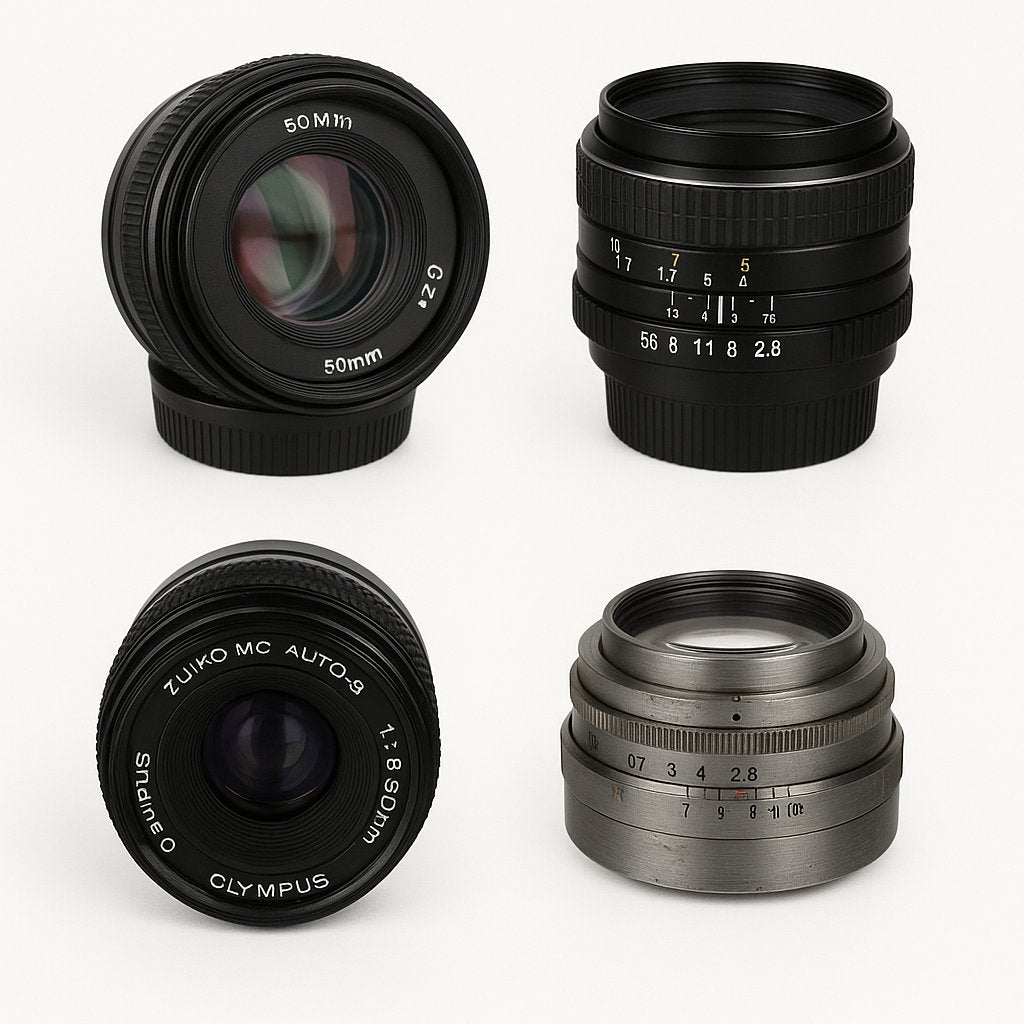
The Nikon EL-Nikkor 50mm f/4 began life in the darkroom, not on a camera body. Designed to project razor-sharp negatives onto photographic paper, it was built for one job: deliver even, flat-field sharpness from corner to corner. Decades later, that same precision makes it a brilliant, budget-friendly macro and reproduction lens for digital shooters.
Because it was engineered to handle fine grain and tiny details, the EL-Nikkor 50mm f/4 excels at capturing textures, documents, and small objects with clarity that often surprises photographers used to kit zooms. On a modern mirrorless camera, it becomes a compact, manual macro tool with a unique rendering.

The first time I adapted a darkroom lens to a mirrorless body, I pointed it at a leaf on my desk. On the back screen, the veins looked like topographic maps and the paper fibers under the leaf suddenly became visible. That level of texture from such a small, simple lens is what hooks many photographers on enlarger optics.
Why This Enlarger Lens Still Matters in 2026
Flat-field sharpness in a digital age
Most modern lenses are optimized for three-dimensional scenes, where a little field curvature is acceptable. The Nikon EL-Nikkor 50mm f/4 is different. It was tailored for flat negatives, so it delivers a very even focus plane—exactly what you want for copy work, scanning film, photographing artwork, or shooting products for online shops.
A sustainable, budget-conscious upgrade
In 2026, photographers are more aware than ever of the environmental cost of constantly upgrading gear. A second-hand EL-Nikkor gives you serious macro performance without commissioning new manufacturing. It’s a way to expand your creative toolset while reusing a high-quality lens that might otherwise sit unused in a drawer.
Technical Overview of the EL-Nikkor 50mm f/4
Optical design and strengths
The EL-Nikkor 50mm f/4 is a compact enlarger lens with a classic optical formula aimed at sharpness, contrast, and flatness of field. While exact element counts can vary by version, the essentials remain the same: it is optimized for close to medium distances, with minimal distortion and excellent reproduction of fine detail.
Key characteristics include:
- Focal length: 50mm, a natural perspective for document and small object work.
- Maximum aperture: f/4, typically used around f/5.6–f/8 for peak sharpness.
- Mount: M39 enlarger thread (not Leica rangefinder spec), requiring an adapter for camera use.
- Aperture control: Manual, with click-stops for precise exposure control.

How to Use the EL-Nikkor 50mm f/4 on Modern Cameras
Essential mounting steps
To bring the Nikon EL-Nikkor 50mm f/4 into the digital world, you only need a few affordable components. On mirrorless bodies, adapting is simple and does not require permanent modification.
- ✔ Use M39–mirrorless adapter.
- ✔ Add a focusing helicoid for variable distance.
- ✔ Stabilize on tripod or copy stand.
- ✔ Ensure even lighting with LED panel or lightbox.
- ✔ Consider reversing ring for extra magnification.
Because the EL-Nikkor was not designed to focus by itself, a focusing helicoid acts as your “focus ring,” giving you control over the lens-to-sensor distance. Combined with extension tubes or bellows, you can reach higher magnifications for macro subjects.
Mirrorless vs DSLR bodies
The lens is most at home on mirrorless digital cameras, where short flange distances allow easy adaptation. On DSLRs, achieving focus can be more challenging due to the longer register distance, and infinity focus is generally out of reach without complex modifications.
Buying a Second-Hand Nikon EL-Nikkor 50mm f/4
What to inspect before you commit
Second-hand enlarger lenses are often in surprisingly good shape, thanks to a quiet life in the darkroom. Still, it pays to inspect them carefully:
What should I check before buying one second-hand? Look for:
- Optics free from haze, fungus, excessive dust, or separation.
- Smooth, snappy aperture blades with no oil contamination.
- Original front and rear caps; packaging or case is a bonus for protection.
At Dutch|Thrift, each lens is checked so that you can concentrate on shooting, not on cleaning up someone else’s neglect.
Why second-hand makes sense
Buying used is not only kinder to your budget; it also extends the life of a precisely made optical tool. Instead of investing in a brand-new macro lens, you can allocate more of your budget to other essentials such as sturdy tripods, LED lighting, and additional camera lenses that complement your setup.
Creative Uses: From Copy Work to Experimental Filmmaking
Copy work, scanning, and documentation
The natural first home for the Nikon EL-Nikkor 50mm f/4 on digital is in copy work. Mount it on a mirrorless body, fix everything on a sturdy stand, and you have an efficient rig for:
- Digitising slides and film strips using a lightbox.
- Reproducing prints, drawings, and documents with minimal distortion.
- Creating consistent product images for webshops and catalogs.
Textures, macro art, and video experiments
Once you have a handle on the lens, it becomes a playground for creative macro studies. Wood grain, fabric weave, weathered paint, and everyday objects turn into abstract compositions. With a reversing ring and extra extension, magnification increases and familiar subjects become unrecognisable patterns.
Video shooters can also adapt the EL-Nikkor 50mm f/4 for close-up scenes, title sequences, or experimental filmmaking. When mounted on a rig with rails and a follow-focus attached to the helicoid, you gain repeatable, manual focus pulls with a distinctive look.
To refine these setups, consider browsing complementary photography accessories such as LED panels, macro rails, and sturdy quick-release plates.
Why Buy from Dutch|Thrift
Curated, tested second-hand gear
Dutch|Thrift focuses on sustainable, pre-loved photography tools that still have many years of life left in them. Instead of trawling auction sites, you can choose an EL-Nikkor 50mm f/4 that has already been inspected, described honestly, and priced fairly.
Building a versatile, eco-friendly kit
By pairing a second-hand enlarger lens with used digital cameras and other gently loved optics, you build a capable system with a significantly lighter environmental footprint. The result: more budget for creative projects and less waste from constant upgrades.
FAQs
Can the Nikon EL-Nikkor 50mm f/4 focus to infinity? Not in its standard adapted form. The lens is designed for close-up and macro distances. To reach anything close to infinity focus would require custom modification or very specific reverse-mount setups, which are not typical for everyday use.
Is the EL-Nikkor 50mm f/4 suitable for digital cameras? Yes, especially on mirrorless bodies when used with an M39–mirrorless adapter and, ideally, a focusing helicoid. In that configuration it works beautifully for macro, flat-field photography, and copy work.
What should I check before buying one second-hand? Inspect the glass carefully for haze, fungus, or separation, and check that the aperture blades move smoothly without sticking. Complete front and rear caps—and any original packaging—help protect the lens during storage and transport.
What makes the EL-Nikkor 50mm f/4 unique compared to modern macro lenses? Its combination of flat-field sharpness, compact size, and low cost make it stand out. While it lacks autofocus and electronic communication, it offers a distinctive, precise rendering that’s ideal for creative projects, copy setups, and experimental work.
Ready to give a darkroom classic a new digital life? Explore our curated selection of second-hand EL-Nikkor lenses and other camera lenses at Dutch|Thrift and build a macro setup that is sharp, sustainable, and truly your own.