



From Darkroom to Digital: The Story of the Nikon El‑Nikkor 50mm f/2.8
A darkroom workhorse with a second life
The Nikon El‑Nikkor 50mm f/2.8 was never designed to sit on a camera. It was built as an enlarger lens, projecting negatives onto photographic paper in the darkroom. For years it was a quiet workhorse: sharp, consistent, and invisible in the final print. Then digital cameras arrived, and photographers started asking a simple question: if this lens can resolve every detail from a negative, what happens if we put it in front of a sensor?
The answer turned a humble enlarger optic into a secret weapon for macro shooters, archivists, and filmmakers. With a simple adapter stack, the El‑Nikkor 50mm f/2.8 became capable of incredibly sharp close‑ups and faithful film scans, all while staying true to its original purpose: revealing detail.
I first met a vintage enlarger lens at a flea market, buried under dusty trays and timers. It looked too clean to leave behind. Back home, a cheap adapter and a mirrorless body transformed that darkroom relic into a razor‑sharp macro tool. That simple experiment permanently changed how I look at “obsolete” gear.

Key Optical Strengths and Build Details
Optics designed for flat, critical sharpness
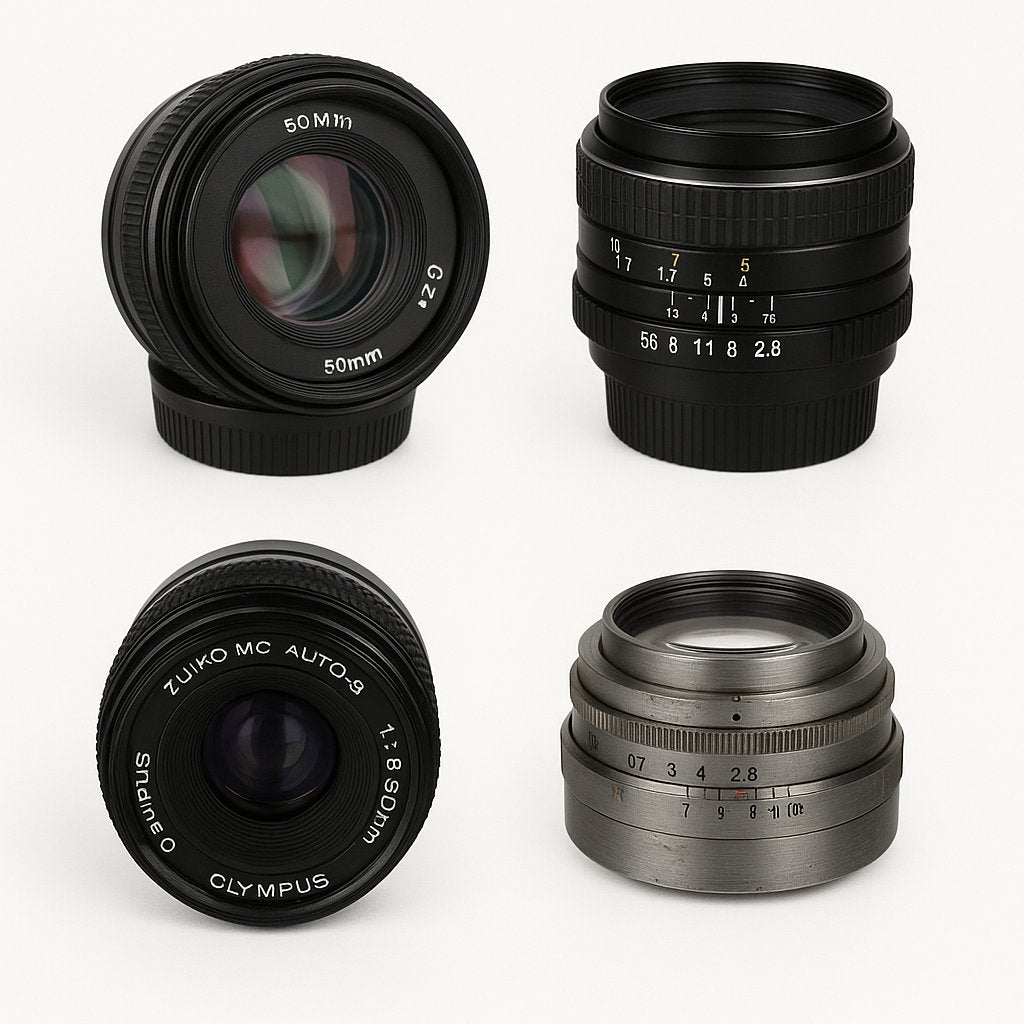
As an enlarger lens, the Nikon El‑Nikkor 50mm f/2.8 is optimized for flat‑field sharpness and low distortion. Instead of pleasing bokeh or fast focusing, the priority is even resolution from corner to corner. That makes it ideal for copying negatives, slides, prints, and small objects where every millimeter matters.
Aperture control is fully manual, with click‑stops that make it easy to set and repeat exposure values. Stopped down around f/5.6 to f/8, many photographers find performance that rivals modern macro lenses, especially in the central image area.
Build quality that outlasts trends
The El‑Nikkor is typically all‑metal with a reassuringly solid feel despite its small size. There is no focusing ring, electronics, or autofocus motor to fail — just glass, aperture blades, and a threaded M39 mount. Treated well, these lenses can outlive multiple camera systems.

Modern Uses: Macro, Digitization, and Creative Video
Building a digital macro rig with the El‑Nikkor
To use the Nikon El‑Nikkor 50mm f/2.8 on a modern mirrorless or DSLR camera, you simply build a small adapter chain. Once mounted, it becomes a highly flexible manual macro lens.
- Mount the lens with an M39–M42 ring and focusing helicoid.
- Attach the helicoid to your camera’s compatible M42 adapter.
- Use manual mode for exposure and focus control.
- Use LED panels for consistent macro or studio lighting.
- Add a macro rail for precise focus stacking.
- Check lens surfaces for haze or fungus.
- Rotate the aperture ring to ensure smooth operation.
- Inspect internal blades — no oil or stickiness.
- Confirm rear mount threads are intact for adapter fitting.
With that setup, you can dial in magnification by adjusting the helicoid and distance to your subject. A macro rail then helps you move the camera for repeatable, stackable shots.
Film scanning and archival work
Because the El‑Nikkor was born in the darkroom, it naturally excels at digitizing film. Mount it on a copy stand or tripod, add a backlit film holder, and you have a high‑quality scanning station. The flat‑field design keeps the entire frame sharp, ideal for 35mm negatives and slides.
Creative video and experimental projects
Video shooters also appreciate the El‑Nikkor for close‑up product shots, textures, and title sequences. The fully manual aperture gives smooth exposure transitions, while the helicoid allows controlled focus pulls at macro distances. Combined with compact LED lights and other photography accessories, this lens turns into a tiny cinema tool with a unique rendering.
Buying the Nikon El‑Nikkor 50mm f/2.8 Second‑Hand
What to look for in a used copy
The El‑Nikkor is robust, but decades of darkroom use can still leave marks. When shopping used, pay close attention to the optics and mechanics before you think about cosmetic wear.
Check that front and rear elements are clean, with only light dust at most. Shine a small flashlight through to look for haze, fungus, or separation. The aperture ring should turn smoothly with distinct clicks, and the blades should snap cleanly without oil residue.
Why buying second‑hand makes sense
Choosing a second‑hand El‑Nikkor 50mm f/2.8 gives you professional‑grade optical performance at a far lower cost than a modern dedicated macro lens. It also keeps existing glass in circulation instead of sending it to landfill or display cabinets. At DutchThrift.com we carefully inspect used camera lenses so you can focus on shooting, not on surprises.
Why the El‑Nikkor Still Shines in 2025
A timeless tool for detail‑obsessed creators
Despite its age, the Nikon El‑Nikkor 50mm f/2.8 fits perfectly into modern workflows. High‑resolution sensors only highlight its strengths: sharpness, neutrality, and consistency. For photographers digitizing archives, building macro rigs, or exploring experimental video, it offers a low‑risk, high‑reward way to expand what your camera can do.
Add a few well‑chosen adapters, a stable tripod, and some LED lighting, and you have a modular, sustainable system that will work across multiple camera bodies for years to come. That is the kind of gear investment that never goes out of style.
FAQs
Can I mount the Nikon El‑Nikkor 50mm f/2.8 directly on my camera? No. It uses an M39 enlarger mount, so you need an M39 to M42 adapter plus a focusing helicoid. Then attach that assembly to your camera via a compatible M42 adapter.
Is this lens suitable for everyday photography? Not really. It excels at macro and digitization, but the bellows‑style focusing setup is slow and impractical for casual or fast‑moving subjects.
What are the differences between El‑Nikkor versions? Earlier models are single‑coated, while later “N” versions add multicoating, which improves contrast and reduces flare under challenging lighting.
How does it compare to a modern macro lens? A modern macro lens adds autofocus, automatic aperture, and easier handling. The El‑Nikkor trades those conveniences for a far lower price while still delivering excellent sharpness and neutral rendering when used carefully.
Curious to try this darkroom classic on digital? Explore our curated second‑hand camera lenses, essential photography accessories, and reliable digital cameras to build your own versatile macro and scanning setup.