



A Quick History of the Canon Speedlite 380EX
The Canon Speedlite 380EX arrived in the late 1990s as one of Canon’s early E-TTL flashes, designed to partner with EOS film cameras and the first wave of digital SLRs. It bridged the gap between fully manual strobes and the automated flash systems many photographers now take for granted.
For photographers moving from hot-shoe “potato mashers” or basic pop-up flashes, the 380EX felt like a revelation: it could talk to the camera, meter through the lens, and deliver surprisingly accurate exposures, all while remaining compact and straightforward.
The first time you trust automatic flash exposure feels a bit like magic: you press the shutter, the scene explodes in light, and the image on the back of the camera (or the lab scan) simply looks right.
Today, the 380EX is considered a vintage flash, but its core design—solid build, simple controls, and dependable E-TTL on compatible bodies—still holds big appeal for budget-conscious shooters and lovers of classic Canon gear.

Key Features and Technical Highlights
Core specs that still hold up
The “380” in 380EX stands for its guide number of 38 (meters, ISO 100), giving it enough power for portraits, family gatherings, and small events when used with a thoughtful bounce setup. It was built for E-TTL (not E-TTL II), meaning Canon bodies from the film and early DSLR era can meter flash exposure through the lens automatically.
The head tilts for bounce, letting you turn harsh direct light into a softer, ceiling-reflected glow. Unlike modern flagships, you won’t find built-in radio triggers or high-speed sync—but you do get a no-nonsense, reliable workhorse.
Practical checklist before you shoot
- Confirm camera-body E-TTL compatibility.
- Use NiMH rechargeable batteries for quicker recycle time.
- Keep head tilted toward ceiling for soft bounce light.
- Test flash after changing batteries or lenses.
- Check tilt mechanism for stiffness.
- Test flash cycle times—should recycle under 6 seconds.
- Inspect for LCD or LED dimming issues.
- Buy from trusted used-gear stores or camera recycling outlets.
Real-World Usage in 2025
On Canon DSLRs and analog EOS bodies
In 2025, the 380EX shines when mounted on compatible EOS film cameras and older DSLR cameras. E-TTL metering handles most of the exposure thinking, making it ideal for people who want dependable results without wrestling with manual power settings at every shot.
Used indoors, bouncing the head off a white ceiling or wall, the flash delivers flattering light with minimal effort. Outdoors at dusk or on cloudy days, set it as fill to lift shadows in portraits while keeping the ambient mood.
Using the 380EX with modern mirrorless bodies
Mounted via EF-to-RF adapters on Canon mirrorless cameras, the 380EX can still fire, but E-TTL automation becomes uncertain or inconsistent, depending on the body and adapter.

Second-Hand Buying Tips
What to check before you buy
Because the 380EX is now a vintage unit, condition matters more than ever. When shopping second-hand—especially online—run through a few simple tests:
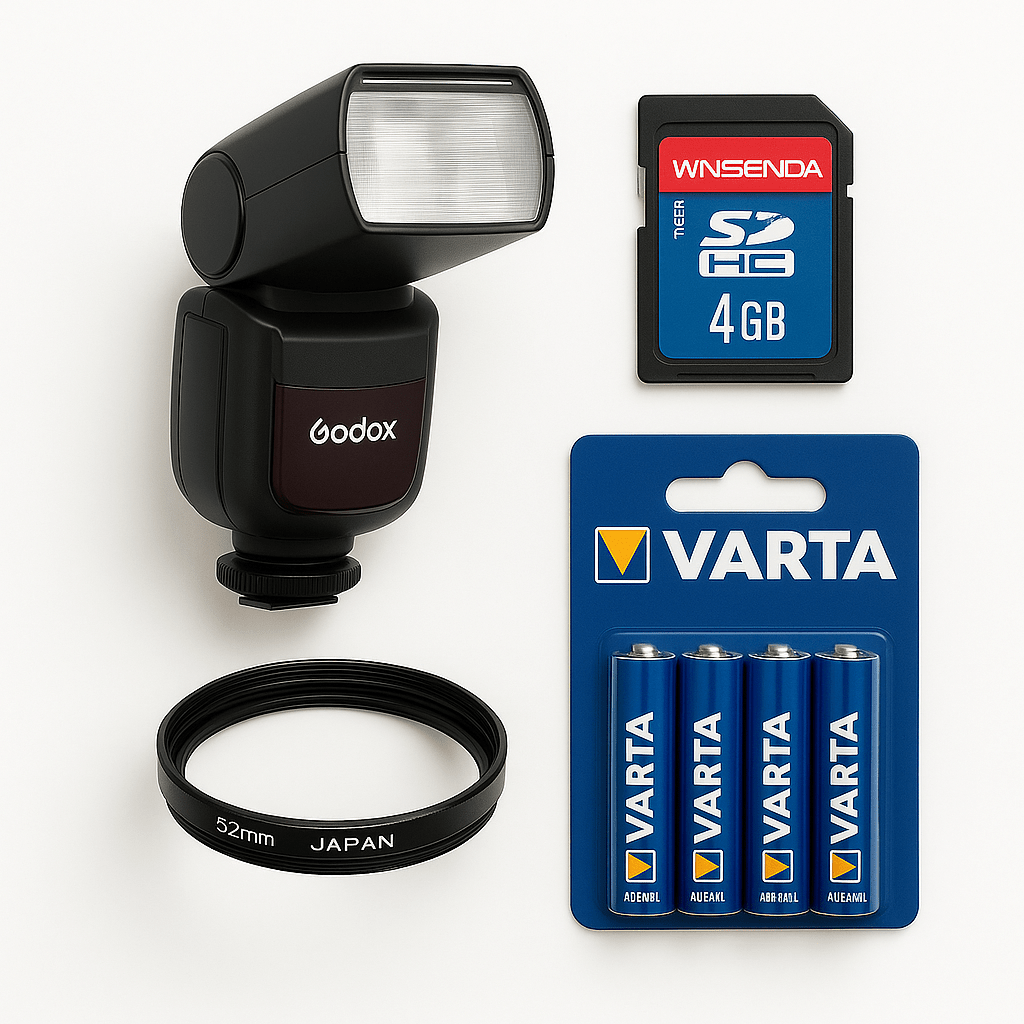
- Pop in four good NiMH AA batteries and fire several full-power flashes. Listen for consistent charging sounds.
- Ensure recycle times stay under about six seconds at full power.
- Check that the tilt and swivel mechanisms move smoothly but hold position firmly.
- Inspect the hot shoe for corrosion or bent contacts.
- Look at the LCD or indicator lights for uneven dimming or flickering.
Buying from a reputable used-gear specialist like DutchThrift.com, or other camera recycling outlets, lowers your risk and supports a more sustainable photo industry by keeping gear in circulation longer.
Creative Ways to Use the Canon Speedlite 380EX
Bounce, fill, and simple off-camera setups
The 380EX is at its best when used creatively rather than just straight-on. Tilt the head toward a neutral ceiling or wall to soften portraits and avoid “flashy” hotspots on skin. For environmental portraits, dial down the exposure compensation on your camera so the flash acts as gentle fill rather than the main light.
You can also use the 380EX off-camera with basic optical triggers or inexpensive wireless hot-shoe triggers, turning it into a budget studio light for product shots or headshots at home.
Perfect partner for sustainable gear kits
Combine a 380EX with a second-hand EOS body, a fast 50mm lens, and a simple reflector for a lightweight portrait kit that fits in a small bag. You will not match the feature list of modern pro flashes, but your footprint—both financial and environmental—stays refreshingly small.
Why This Vintage Flash Still Matters
The Canon Speedlite 380EX matters in 2025 for three big reasons: affordability, reliability within its limits, and sustainability. It opens the door to better lighting for photographers who would rather invest in lenses or film than a brand-new flash.
For students, hobbyists, and anyone building a conscious, second-hand kit, the 380EX proves that older gear can still deliver beautiful results. When paired with thoughtfully chosen analog cameras, early EOS DSLRs, and a few smart photography accessories, it becomes a key piece of a capable, low-impact system.
If you understand its strengths—E-TTL on compatible bodies, solid power, simple operation—and its limits—no advanced wireless or high-speed sync—the 380EX can easily earn a permanent place in your camera bag.
FAQs
Does the Canon Speedlite 380EX work with modern Canon mirrorless cameras? It can physically mount via EF-to-RF adapters, but E-TTL automation is unreliable; treat it as a manual or optically triggered flash instead.
Is the 380EX still powerful enough for portraits? Yes. With a guide number of 38, it is well suited to indoor portraits and small events, especially when bounced off ceilings or walls within a reasonable distance.
What batteries work best in a used 380EX? High-quality NiMH AA batteries—such as Eneloop Pro—provide faster recycling and are more sustainable than disposable alkaline cells.
How much should I expect to pay for a used Canon Speedlite 380EX? Typical prices range from about $30 to $50 USD, depending on condition, age, and included accessories like pouches or stands.
Ready to explore what a vintage flash can do for your photography? Browse the curated selection of second-hand flashes and related photography accessories at DutchThrift.com and build a lighting kit that is creative, affordable, and sustainable.