



Introduction: A Mechanical Legend That Still Performs
The Canon F-1 with the Canon FD 50mm f/1.8 is one of those rare film camera setups that still feels completely at home in the hands of today’s photographers. Built as a professional 35mm SLR, the F-1 combines mechanical reliability with intuitive controls, while the compact 50mm lens delivers sharp, characterful images on any roll of film you load.
In an era of autofocus and endless menus, this all-manual setup slows you down just enough to think—and rewards you with consistency and creative precision that never really goes out of style.
The first time you feel the solid film advance, hear the precise “snick” of the shutter, and set exposure with real dials, photography stops feeling like tapping a screen and starts feeling like craft.
Design and Build: Engineering for a Lifetime
Mechanical reliability you can feel
The Canon F-1 was engineered during a time when cameras were expected to survive hard professional use. Its metal chassis, mechanical shutter, and robust controls are designed to keep working in varied conditions, from winter streets to summer festivals.
Most functions are fully mechanical. Even if the meter battery dies, the shutter still fires, and you can keep shooting with an external light meter or Sunny 16. This is a crucial advantage for long trips and remote locations.

Ergonomics built around the photographer
The viewfinder is bright and clear, with essential information where you need it. Shutter speed, aperture, and focus controls are all reachable without taking your eye away from the frame. This makes it easier to react quickly while still working fully manually.
Lens Spotlight: Canon FD 50mm f/1.8
A compact, sharp, everyday lens
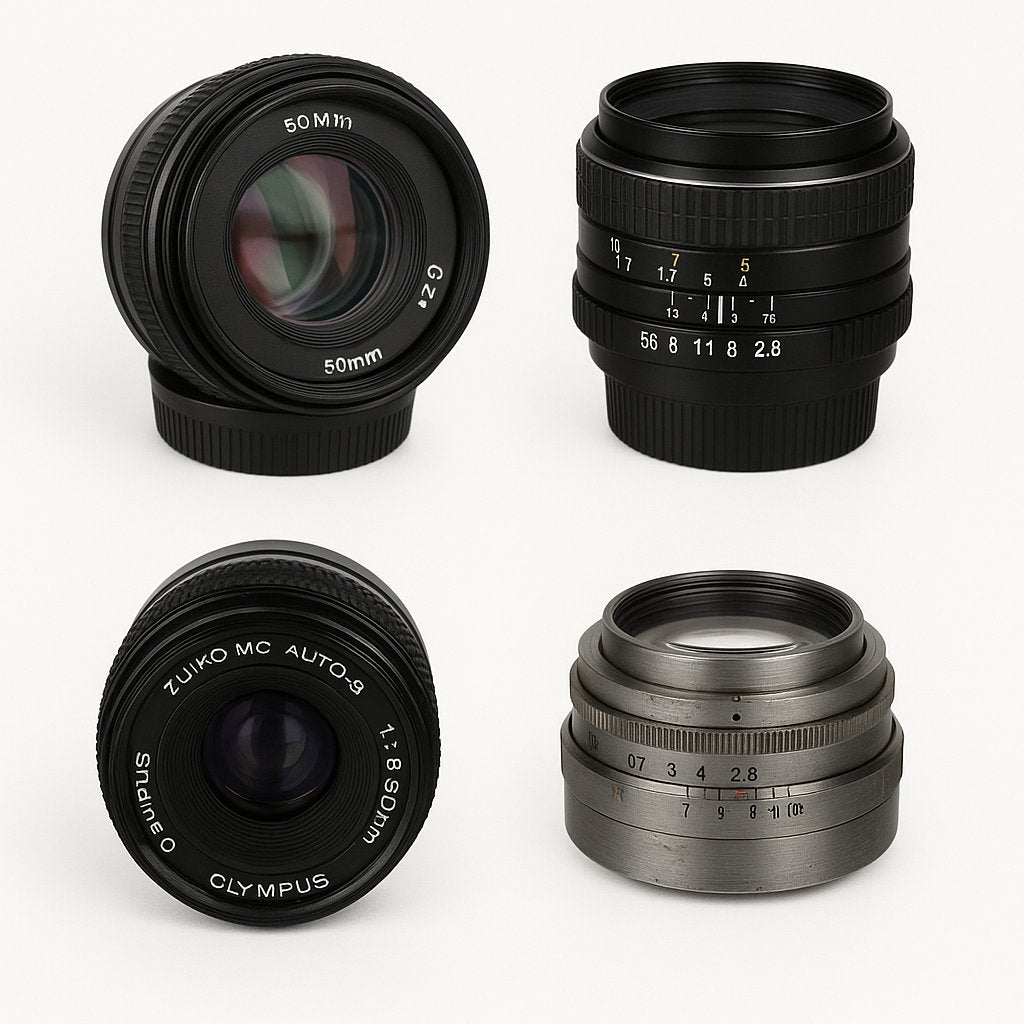
The 50mm f/1.8 FD lens completes the setup. On 35mm film, this focal length is close to natural human vision, making it ideal for everyday photography—street, portraits, travel, details, and documentary work all feel natural through this lens.
Stopped down, it’s crisp and contrasty, perfect for landscapes and city scenes. Wide open at f/1.8, it offers a gentle background blur and a classic rendering that flatters portraits without looking overly clinical.

Manual focus as a creative tool
With a smooth focusing ring and clearly marked distance scale, the 50mm f/1.8 encourages intentional focusing. Techniques like zone focusing and hyperfocal shooting become practical tools for fast-paced street or travel photography.
How It Fits in a Modern Workflow
Hybrid analog–digital shooting
The Canon F-1 is perfectly suited to hybrid workflows. You can shoot on film, have the negatives developed, and then scan them for editing in your favorite software. This gives you the tactile experience of analog capture plus the flexibility of digital post-processing.
Once scanned, your Canon F-1 images fit seamlessly into a modern portfolio or social feed, sitting comfortably alongside your digital files while offering a different texture and mood.
Documenting your process
Manual cameras reward consistent note-taking. Knowing which film stock, ISO, and exposure settings you used gives you a repeatable pathway to looks you love.
- Choose the right ISO film for light conditions.
- Meter carefully using built-in or external light meter.
- Keep notes on exposure for each roll.
- Develop and scan negatives for post-processing flexibility.
- Use the correct replacement battery type.
Techniques and Film Choices That Bring It Alive
Film stocks to match your style
Low ISO (ISO 50–100) films pair wonderfully with the F-1 and 50mm f/1.8 for daylight shooting, giving fine grain and rich tonality. Medium-speed films around ISO 200–400 handle changing light well and are ideal for travel. High ISO films (ISO 800 and above) bring character, visible grain, and more flexibility in low light.
Simple techniques, powerful results
Use the F-1’s manual controls to experiment:
- Underexpose slightly for moodier, deeper shadows.
- Overexpose color negative film by one stop for softer tones.
- Try backlighting with spot metering on faces for glowing portraits.
- Practice zone focusing at f/8 for quick, candid street scenes.
Buying Second-Hand: What to Inspect Before You Commit
Essential checks for the Canon F-1 and 50mm f/1.8
When shopping second-hand, mechanical health matters more than cosmetic perfection. A little brassing or minor scratches rarely affect performance, but internal issues can be expensive to fix.
- ✅ Test shutter at all speeds.
- ✅ Examine lens for haze or fungus.
- ✅ Check prism for desilvering.
- ✅ Replace seals if degraded.
- ✅ Confirm smooth focusing and aperture movement.
If you’re unsure, buying from a dedicated second-hand specialist like DutchThrift.com helps reduce risk. Bodies and lenses are inspected so you can focus on shooting, not repairs.
Maintenance and Accessories for Smooth Shooting
Simple care for long-term reliability
Keeping your Canon F-1 in good condition doesn’t require much—just consistent, gentle care. Store it in a dry place, avoid extreme heat or moisture, and use a lens cap and case when travelling.
Light seals on vintage cameras eventually degrade; replacing them is a worthwhile investment for preventing light leaks. Occasional professional servicing can keep shutter speeds accurate and the viewfinder clear.
Accessories that make a difference
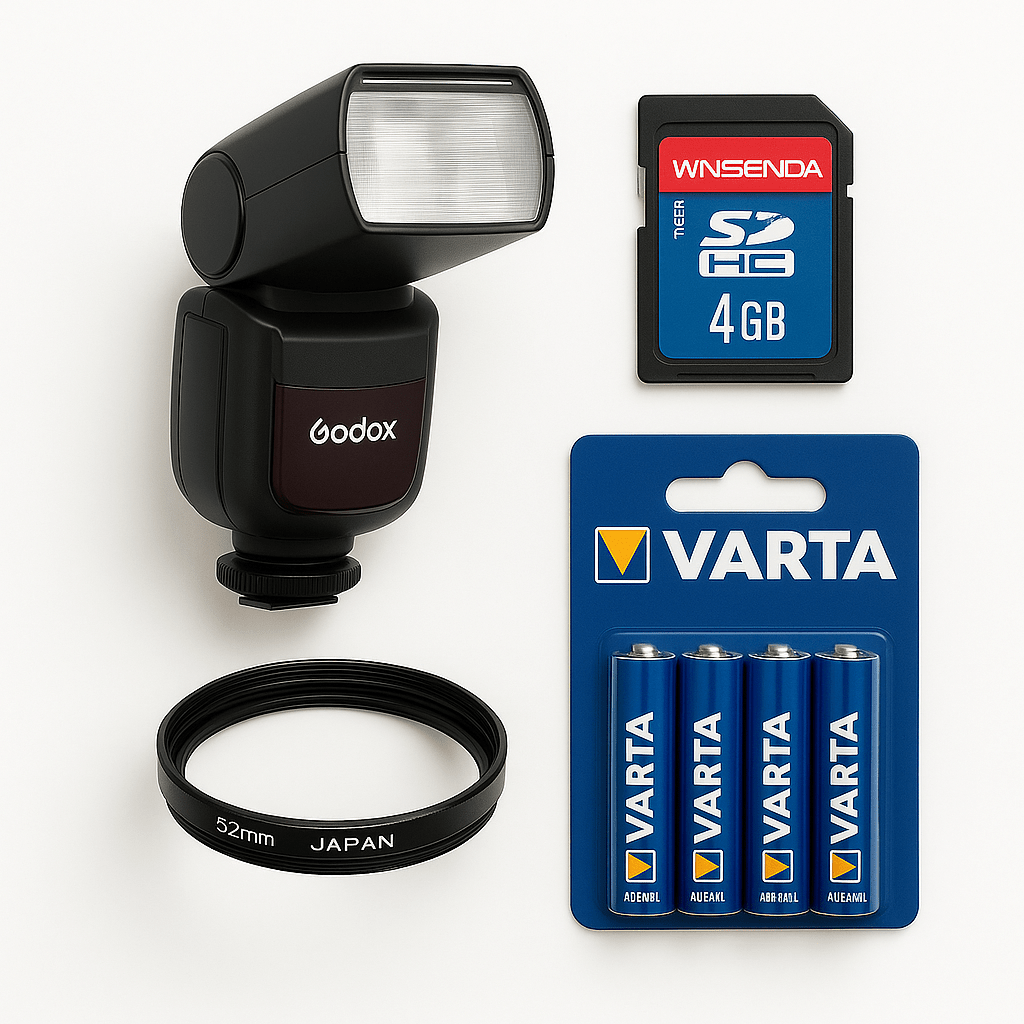
A sturdy strap, a clean UV or clear filter, and a reliable light meter (if you prefer external metering) are simple upgrades that improve your shooting experience. A compact tripod and cable release unlock long exposures and night photography.
Explore quality second-hand photography accessories to build out a thoughtful, sustainable kit around your F-1.
Conclusion: The Timeless Value of Manual Precision
The Canon F-1 with the 50mm f/1.8 FD lens is more than a nostalgic object. It’s a precise, durable tool that rewards careful observation, deliberate exposure, and patient crafting of each frame. Whether you’re just starting with analog or adding a serious film body to a digital setup, this combination offers a balanced blend of reliability, simplicity, and creative potential.
When you’re ready to explore more bodies, analog cameras, or compatible camera lenses, choosing second-hand is both sustainable and smart—especially with a classic system as enduring as Canon FD.
FAQs
Is the Canon F-1 still practical for modern photographers? Yes. Its mechanical reliability, clear viewfinder, and classic manual controls make it an excellent tool for learning exposure and for creative analog or hybrid workflows.
What battery does the Canon F-1’s light meter use? The original meter used a 1.35V mercury cell. Modern replacements include the Wein MRB625 or an MR-9 adapter paired with silver oxide cells to approximate the correct voltage.
Can the 50mm FD lens be used on digital cameras? Yes. With the right FD adapter, you can mount it manually on mirrorless systems such as Canon RF, Sony E, Fuji X, and Micro Four Thirds, preserving its classic rendering.
What should I inspect before buying a used Canon F-1? Check shutter accuracy at all speeds, look for clean optics and a clear prism, confirm that light seals are intact or recently replaced, and ensure the lens focuses and stops down smoothly—cosmetic wear is less important than mechanical precision.
Ready to build a characterful, sustainable kit around the Canon F-1? Browse our curated selection of analog cameras, matching camera lenses, and essential photography accessories at DutchThrift.com.