



The Story Behind the AGFA Optima Flash
A compact classic from the point-and-shoot era
The AGFA Optima Flash belongs to a generation of compact 35mm cameras designed for everyday shooters long before smartphones existed. It is a simple, reliable point and shoot camera built around the idea that photography should feel effortless: drop in a roll of film, close the back, press the shutter, and let the camera do the rest.
In an era where SLRs and interchangeable lenses dominated enthusiast photography, the Optima Flash focused on accessibility. Automatic exposure, a fixed-focus lens, and a built-in flash meant that anyone could document life—birthdays, holidays, and everyday street scenes—without technical training.

The first time I held an old film camera, I was struck by how light it felt—no menus, no screens, just a viewfinder and a single button. Photography suddenly felt clearer: look, feel, click, and trust the moment instead of the settings.
Technical Features That Matter
Key specs and real-world performance
The AGFA Optima Flash is a fully automatic compact 35mm camera with a fixed-focus lens and integrated flash. It is designed for DX-coded 35mm film, which allows the camera to read the film’s speed automatically and set exposure accordingly.
Its motorized film advance and rewind system reduce handling errors and make shooting faster. Combined with automatic exposure, this makes the Optima Flash a practical companion for travel, parties, and casual street photography where you want to react quickly.
Essential usage checklist
- Load DX-coded 35mm film correctly.
- Test flash and motor function before each shoot.
- Use fresh batteries for consistent flash output.
- Scan negatives at 2400dpi or higher for digital use.
- Look for clean battery terminals.
- Ensure shutter fires consistently.
- Verify flash charges quickly.
- Inspect lens for fungus or haze.

Why Film Creators Still Love It in 2025
Simple controls, honest results
In 2025, the AGFA Optima Flash appeals to a new generation of photographers who value imperfection and authenticity. Its fixed-focus lens delivers a charming, slightly soft rendering that feels nostalgic rather than clinical. Skin tones are gentle, highlights bloom a bit with flash, and the overall look is unmistakably analog.
Because the camera handles exposure automatically, you are free to concentrate on timing and composition instead of settings. For many creators, this becomes a refreshing counterbalance to the hyper-controlled look of digital photography.
There is also a sustainability angle: choosing a second-hand AGFA Optima Flash from a store focused on used analog cameras keeps classic gear in circulation and reduces electronic waste. You get a unique visual style without adding another new gadget to the world.
Modern Techniques and Workflows for the Optima Flash
From 35mm negative to social media post
The AGFA Optima Flash integrates easily into a modern hybrid workflow. After shooting, you can have your film processed at a lab and choose either prints, scans, or both. For editing and sharing online, scans at 2400dpi or higher preserve enough detail for social media, small prints, and zines.
Once digitized, your images can be processed much like RAW files: adjust contrast, crop, and color-balance while keeping the organic grain and analog character of the original negative.
Shooting techniques that work well
Because of its fixed-focus lens, the Optima Flash shines at everyday distances—friends across the table, street scenes, and daytime walks. Use the flash indoors or in backlit situations to keep faces bright, and rely on daylight outdoors where the lens’s character comes through most clearly.
Pairing the camera with a single film stock for an entire season is a helpful creative constraint. Over time you will learn exactly how that film responds to different lighting conditions, making your results more consistent while keeping your process simple.
Buying a Second-Hand AGFA Optima Flash: What to Check
Practical inspection tips
When you buy a used AGFA Optima Flash, a quick inspection goes a long way. First, check the battery compartment for corrosion or leakage, and confirm that the contacts are clean and shiny. Insert fresh batteries, then listen for the motor when you press the shutter and advance film.
Check that the shutter fires reliably on every press and that the flash charges within a few seconds. A slow or non-functioning flash can indicate deeper electronic issues.
Optics and light seals
Inspect the lens carefully under a strong light. Look for fungus, haze, or deep scratches that could reduce contrast or sharpness. Some dust is normal in older cameras and rarely visible in final images.
Finally, open the film back and look at the foam light seals around the door edges. Crumbling or sticky foam may need replacement to prevent light leaks, though this is a relatively simple and affordable repair for many users.
Accessories and Film Recommendations
Film stocks that suit the Optima Flash
The AGFA Optima Flash performs well with widely available color negative films such as Kodak Gold and Fuji C200. These emulsions offer forgiving exposure latitude and warm, vibrant colors that complement the camera’s built-in flash and casual shooting style.
For a classic monochrome look, Ilford HP5+ is a versatile choice. Its higher sensitivity and robust latitude make it ideal for mixed lighting conditions, from indoor scenes to cloudy street photography.
Useful accessories for everyday shooting
Even though the Optima Flash is self-contained, a few simple additions make it more enjoyable to use. A comfortable wrist strap or small camera bag protects it during travel, while a soft pouch prevents scratches on the body and lens.
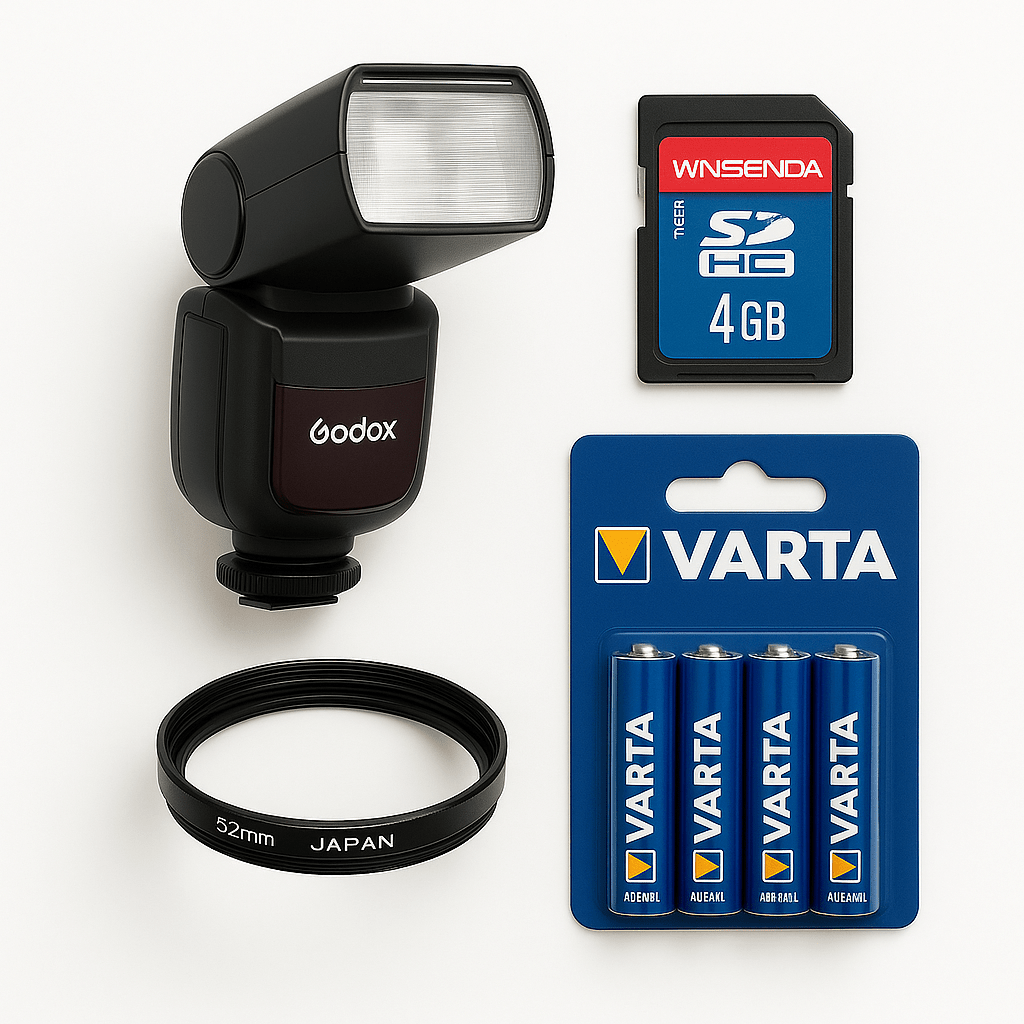
Rechargeable AA or AAA batteries (depending on your specific model) are a sustainable option that keeps your running costs low. You might also consider a compact cleaning kit for the lens and viewfinder—both small investments that help your second-hand camera last for years.
Browse supporting photography accessories to round out your setup and keep your Optima Flash ready for any outing.
The Timeless Value of the AGFA Optima Flash
A simple tool with lasting charm
The AGFA Optima Flash represents a style of camera that has largely disappeared: a compact, honest tool that encourages you to notice the world rather than the technology in your hands. It invites you to slow down, choose your moments carefully, and trust the chemistry of film.
Buying one second-hand aligns with a more sustainable approach to photography—reusing what already exists while gaining access to a distinctive, analog aesthetic. Whether you are just starting with 35mm or adding a no-fuss pocket camera to your kit, the Optima Flash remains a quietly brilliant choice.
FAQs
Is the AGFA Optima Flash easy to use for film beginners? Yes, its automatic exposure, fixed-focus lens, and motorized film system make it ideal for newcomers to 35mm photography.
Which film works best with the AGFA Optima Flash? Color negatives like Kodak Gold or Fuji C200 give bright, vivid results, while Ilford HP5+ delivers a classic black-and-white look.
What should I check before buying a used AGFA Optima Flash? Inspect the flash, film advance, light seals, and battery compartment for corrosion or wear, and confirm that the shutter fires consistently.
Can I still find batteries for the AGFA Optima Flash? Yes. Most units use standard AA or AAA batteries, which are easy to find and available in rechargeable options for more sustainable use.
Ready to explore more film options? Discover other characterful analog cameras and compact point and shoot models waiting for a new life in your camera bag.