








Meta description: Discover 2025’s best used prime lenses for cinematic close-ups. Learn how to test, maintain, and choose film-worthy cine primes that add character to your shots.
What Makes a Prime Lens Cinematic for Close-Ups?
In this section, you’ll discover how focal length, aperture, and optical design shape cinematic emotion through your lens choice.

Filmmakers know that primes stand apart from zooms by delivering more consistent sharpness, less distortion, and the ability to create a dreamlike sense of depth. Between 35mm and 85mm, you get natural perspectives that flatter faces and textures without feeling compressed or exaggerated.
- ✓ Select focal lengths between 35mm–85mm for close-up framing
- ✓ Look for fast apertures (f/1.2–f/2) for shallow depth of field
- ✓ Test focus throw smoothness for precise manual control
One evening on a student short, I discovered how gently rolling focus from eye to cheek could shift the audience’s empathy. The falloff wasn't just blur—it was storytelling through optics.
Pros
- Superior sharpness and micro-contrast for nuanced emotion
- Wider apertures allow expressive background separation
- Fixed focal length encourages thoughtful framing
Cons
- Limited flexibility compared to zooms
- Manual focus requires patience and rehearsal
Top Used Prime Lenses for Cinematic Close-Ups in 2025
This section reviews trusted second-hand cine primes that define the filmic look of 2025—blending sharpness, warmth, and character in one frame.

Three names consistently appear in filmmakers’ kits: Zeiss Milvus for precision, Canon FD for vintage charm, and Sigma Art for modern consistency. Each offers a distinct texture—Zeiss brings clean separation, Canon glows softly under practical lights, and Sigma maintains vibrant accuracy across color spaces.
| Name | Best for | Key Spec | Look/Result | Latitude/Usability | Notes |
|---|---|---|---|---|---|
| Zeiss Milvus 50mm f/1.4 | Controlled contrast & cinematic sharpness | Manual focus, solid metal build | Neutral color, deep micro‑contrast | Excellent for digital cinema | Superb clarity for grading flexibility |
| Canon FD 50mm f/1.4 | Organic, vintage warmth | FD mount, manual aperture | Gentle focus falloff | Medium usability | Great for dreamy close-ups |
| Sigma Art 85mm f/1.4 | Modern portrait precision | Fast AF, optical stabilization | Clean bokeh, minimal aberration | High usability | Balances modern sharpness with softness |
- ✓ Inspect exterior and mount for scratches or dings
- ✓ Check aperture ring smoothness and oil-free blades
- ✓ Verify focus ring consistency across range
On one short I shot, a slightly hazy Canon FD transformed a sterile kitchen into a hazy pastel dream. Imperfection added humanity—the lens became a collaborator, not just gear.
Explore our selection of camera lenses to find comparable used primes ready for fresh storytelling.
Testing and Maintaining Used Cine Primes
Here, you’ll learn safe ways to assess optical quality and care for pre-owned lenses to keep them production-ready for years.
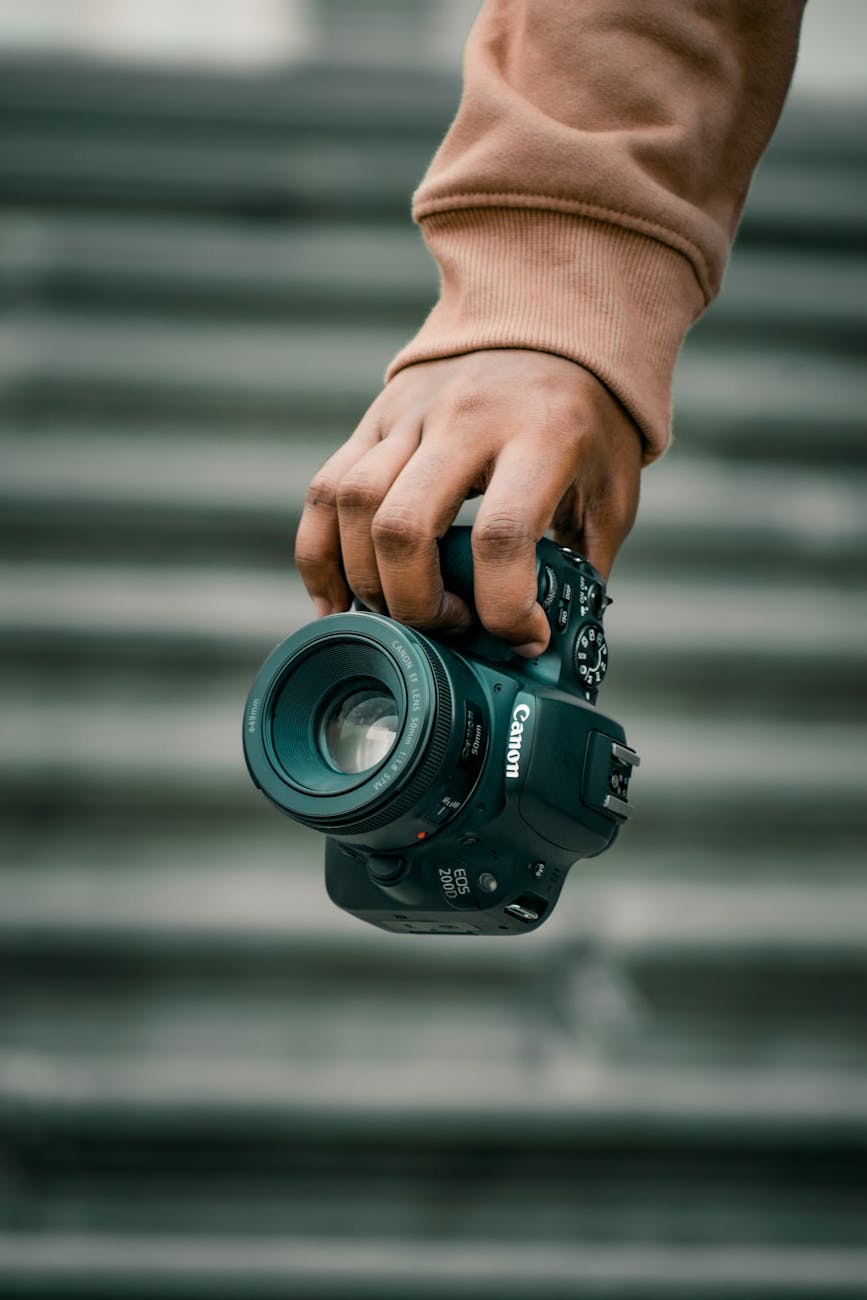
- ✓ Use consistent lighting for testing sharpness across frame
- ✓ Review footage at 100% magnification for corner softness
- ✓ Store lenses in dry, temperature-stable environments
I once bought a used Zeiss 50mm that looked perfect until I noticed faint fogging behind the rear element. A gentle cleaning by a technician restored it entirely—proof that a small check saves big headaches later.
Responsible upkeep not only protects your investment but also supports sustainability through long-term gear reuse. Choosing second-hand digital cameras alongside inspected lenses extends that eco-conscious mindset across your toolkit.
Creative Close-Up Ideas Using Used Primes
This section covers how to push the artistic potential of used cine primes, combining light, movement, and focus transitions for emotional resonance.

- ✓ Try backlighting hair and skin with a 50mm f/1.4 lens
- ✓ Use diffused window light for soft facial highlights
- ✓ Play with subject movement to emphasize lens character
During a micro-budget documentary, swapping a modern Sigma 85mm for a Canon FD 50mm turned polished talking heads into intimate confessions. The shift in rendering reshaped the entire emotional rhythm of the film.
For analog aesthetic lovers, pairing these lenses with refurbished film cameras can reveal fresh color nuances hiding in familiar focal lengths.
Quick Decision
- Choose Zeiss Milvus if you need consistent professional sharpness and neutral color grading latitude.
- Pick Canon FD if you crave vintage softness and organic falloff for emotional close-ups.
- Opt for Sigma Art if you want reliable autofocus with a cinematic edge on digital sets.
- Mix formats if you enjoy hybrid workflows—classic glass on modern bodies adds storytelling depth.
FAQs
What are the best used primes for cinematic close-ups in 2025?
Filmmakers consistently favor Zeiss Milvus, Canon FD, and Sigma Art series. Zeiss gives crisp micro-contrast, Canon offers golden warmth, and Sigma captures modern, color-faithful imagery.
Which used prime lens brands hold value for filmmakers?
Zeiss and Canon FD lenses maintain strong resale appeal thanks to optical quality, durable construction, and timeless rendering suitable for both digital and film workflows.
How to test optical quality of second-hand cine primes?
Inspect under bright neutral light, shoot a test chart, and manually sweep focus to check smoothness. Look for internal haze, scratches, or element misalignment when filming plain surfaces.
Are vintage primes still relevant for cinematic close-ups?
Yes—vintage primes are prized for unique flares, softer contrast, and warmth that counter digital sharpness. Their imperfections impart a filmic, human quality to close-ups.
Find Your Next Lens
Explore our curated collection of verified used prime lenses. Each one is inspected, cleaned, and ready to bring cinematic intimacy back to your storytelling.