



A Snapshot of the Kodak S Series S300MD
The Kodak S Series S300MD is a compact 35mm point-and-shoot camera built for one thing above all: making photography easy. With automatic exposure, fixed focus, and a built-in flash, it strips shooting down to the essentials so you can focus on the moment instead of the settings.
Where some film cameras demand careful metering and manual focusing, the S300MD invites you to simply load a roll, close the back, and let the motor do its thing. It’s a true pocket companion for everyday life, festivals, city walks, and holidays.

The first time I picked up a compact film camera, I remember being surprised by how un-intimidating it felt. No dials to decode, no menus to scroll through — just a small plastic box that clicked, whirred, and turned fleeting moments into something tangible. That simplicity is exactly what still draws people to cameras like the Kodak S300MD today.
Technical Features at a Glance
Core specifications
The S300MD is designed as an everyday snapshot camera, and its feature set reflects that philosophy:
- Film format: 35mm (standard 135 cartridges, color or black-and-white)
- Focus: Fixed focus lens for general-purpose sharpness
- Exposure: Automatic exposure control
- Flash: Built-in flash for low-light or indoor scenes
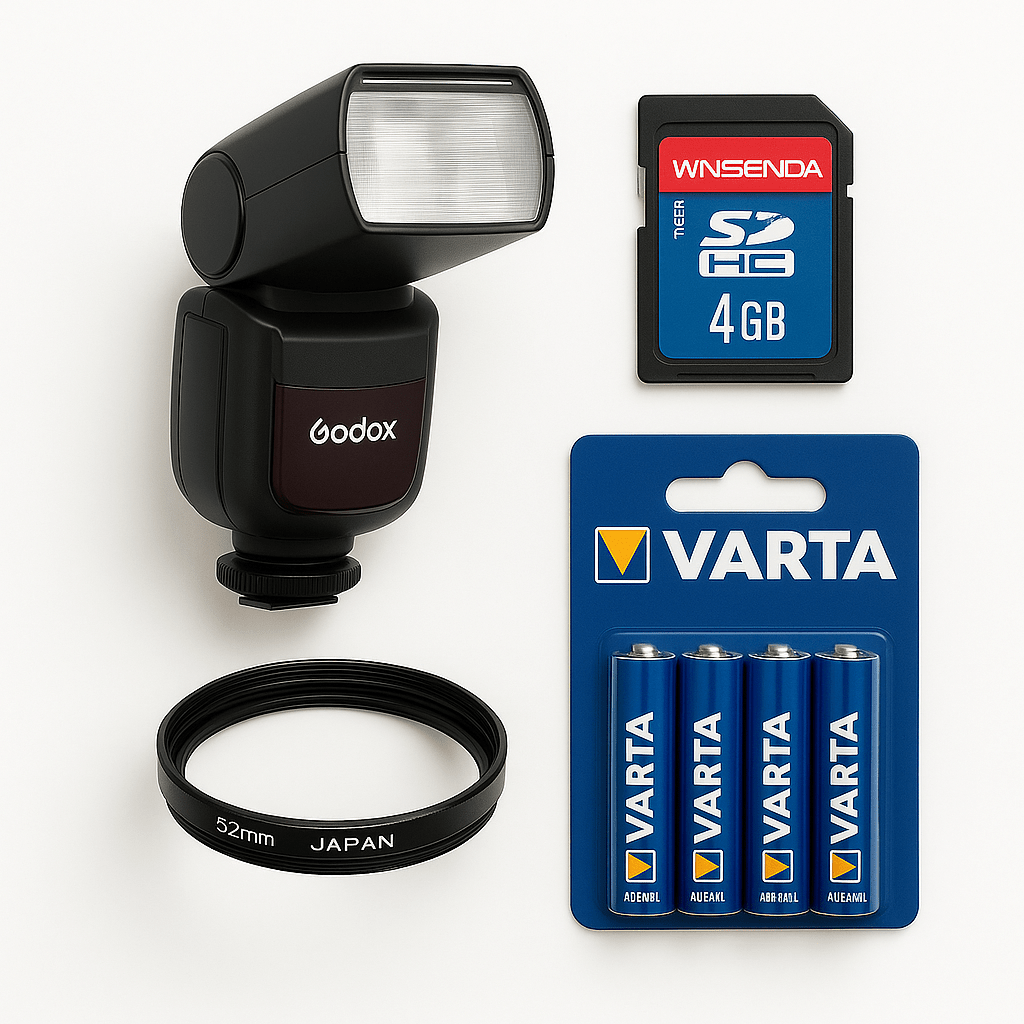
- Power: Two AA batteries (alkaline or Ni-MH)
- Film advance: Motorized advance and rewind
This combination makes the camera nearly foolproof. There’s no need to set shutter speeds or apertures; the meter and electronics handle exposure while the fixed-focus lens keeps most everyday scenes acceptably sharp.
Battery and film compatibility
One of the S300MD’s underrated strengths is its reliance on standard AA batteries. You can buy them almost anywhere, which is ideal for travel or long shooting days. For film, it performs best with ISO 100–800. That range covers slow, fine-grain daylight films up to more versatile, faster stocks for mixed lighting.
Why It Still Matters in 2025
Film as an antidote to digital overload
In 2025, most of us carry powerful smartphones with multi-lens cameras. Yet there’s a growing hunger for slower, more intentional image-making. The Kodak S300MD answers that without demanding technical expertise. You get the look and feel of real 35mm negatives, but with the simplicity of a disposable camera that you can reuse again and again.
It encourages you to think in 24 or 36 frames, not endless bursts. Each click costs a little bit, and that cost nudges you to observe more carefully — to wait for expressions, light, and timing.
A sustainable way into analog
Choosing a second-hand S300MD is also a sustainable decision. Instead of buying newly manufactured plastic cameras, you give an existing device a second life. That aligns perfectly with the philosophy behind curated analog cameras at DutchThrift: less waste, more creativity.

Practical Shooting Tips and Film Pairings
Everyday shooting made simple
To get the most from your Kodak S300MD, you don’t need advanced technique — just a few habits:
- Load fresh AA batteries before each shoot. The motor and flash are battery-hungry; start with a full charge.
- Bring spare batteries when inspecting in person. They’re essential for testing and for long days out.
- Use films rated between ISO 100–800 for best results. This keeps exposure within the camera’s comfort zone.
- Test the flash and motor advance regularly. Listen for smooth whirring and check that the ready light comes on.
- Keep a small pouch to prevent scratches. The lens and viewfinder stay clearer and your camera looks better for longer.
Recommended films for the Kodak S300MD
Because exposure is automatic, choosing a forgiving film stock helps. Here are some evergreen pairings:
- ISO 200 color negative (such as Kodak Gold 200): ideal for bright days, holidays, and outdoor portraits.
- ISO 400 color negative (like Ultramax 400): a versatile choice for mixed lighting, street photography, and indoors with flash.
- ISO 800 color or black-and-white: useful for low light or events, especially if you’re not using flash continuously.
Once your rolls are developed, scanning the negatives gives you digital files that are easy to share on social media or archive alongside your smartphone photos.
Buying Second-Hand: What to Check
Key inspection points
The Kodak S300MD is a straightforward camera, which makes buying second-hand relatively low risk — if you know what to look for. When browsing listings or visiting a store, pay attention to these areas:
- Look for units listed as “tested and working”. This usually means the shutter, flash, and motor have been checked.
- Inspect the battery compartment. Avoid heavy corrosion; minor residue can sometimes be cleaned, but severe damage is a red flag.
- Check the lens and viewfinder. They should be free of deep scratches, fungus, or heavy haze.
- Test the flash and motor advance regularly. With fresh batteries, ensure the flash charges and the film transport sounds smooth.
- Avoid cracked film doors or loose hinges. Light leaks can ruin an entire roll and are harder to fix.
Why condition matters for simple cameras
Because you can’t override the camera’s automatic systems, you rely entirely on its electronics and mechanics working as designed. A well-maintained S300MD behaves consistently from roll to roll; a neglected one can misfire, underexpose, or scratch film without warning.
The Kodak S300MD’s Place in Modern Creative Workflows
From pocket camera to digital archive
The S300MD slots neatly into a modern, hybrid workflow. Use it alongside your phone or digital camera for a different look and pacing. Many photographers now carry a compact 35mm like this for personal moments, while reserving digital gear for client work or fast-turnaround projects.
After shooting, you can have the lab develop and scan your film, then edit lightly on your computer or phone. The grain and color of 35mm add a tactile quality that’s hard to replicate with filters alone.
Complementing your existing setup
If you already own interchangeable-lens cameras, the S300MD can serve as a no-pressure alternative when you don’t want to think about lenses or settings. Slip it into a bag with a few rolls and a couple of AAs, and you have a ready-made travel or party kit.
To build a small, versatile setup, pair the S300MD with other second-hand point and shoot cameras or essential photography accessories like straps, cases, and battery organizers.
FAQs
Is the Kodak S300MD suitable for beginners? Yes. It offers automatic exposure, fixed focus, and a built-in flash, making it ideal for anyone learning film photography or returning after years away.
What batteries does the Kodak S300MD use? It runs on two easy-to-find AA batteries, either standard alkaline cells or rechargeable Ni-MH batteries.
What film works best with the Kodak S300MD? Daylight films like Kodak Gold 200 are great for sunny conditions, while faster films such as Ultramax 400 handle everyday use and mixed lighting very well.
What should I check when buying one second-hand? Inspect the battery compartment for corrosion, test the flash and motor advance with fresh batteries, and make sure the lens, viewfinder, and film transport are clean and functional.
Ready to add a compact 35mm to your kit? Explore more curated analog cameras, discover other easy-to-use point and shoot cameras, and complete your setup with sustainable second-hand photography accessories at DutchThrift.com.