



The Fuji DL-25N at a Glance
The Fuji DL-25N is a compact 35mm point-and-shoot camera designed for effortless everyday photography. With automatic exposure, a fixed-focus lens, and a built-in flash, it strips film shooting back to the basics: raise the camera, frame your subject, and press the shutter.
Compared to more complex analog cameras, the DL-25N is intentionally minimal. There are no exposure dials to master and no interchangeable lenses to choose from. That simplicity is exactly what makes it appealing for beginners, travelers, or anyone who just wants to enjoy film without technical distraction.

I still remember borrowing a small plastic point-and-shoot from a family drawer for my first roll of film. No one was sure if it even worked, but that clack of the motor advance and the surprise of picking up printed photos a week later was enough to hook me on film for good.
Key Features That Define Its Charm
Compact fixed-focus design
The DL-25N uses a fixed-focus lens, meaning there is no autofocus system to wait for or manual focusing to worry about. It is set to capture typical everyday scenes—friends, city walks, family gatherings—without fuss. The camera works best when your subjects are a few meters away and reasonably well lit.
Automatic exposure and flash
Exposure is automatic. The camera meters the available light and decides whether to fire the flash. For users, that means consistent exposures in most daylight and indoor snapshot situations. The built-in flash is synchronized with the shutter, giving you reliable results in dim scenes.
35mm film and DX-coded ISO detection
The Fuji DL-25N uses standard 35mm film, the most common and widely available film type today. It reads DX-coded canisters, automatically detecting film in the 100–400 ISO range. That allows you to load common color negative or black-and-white rolls without needing to set ISO manually.
Powered by AA batteries
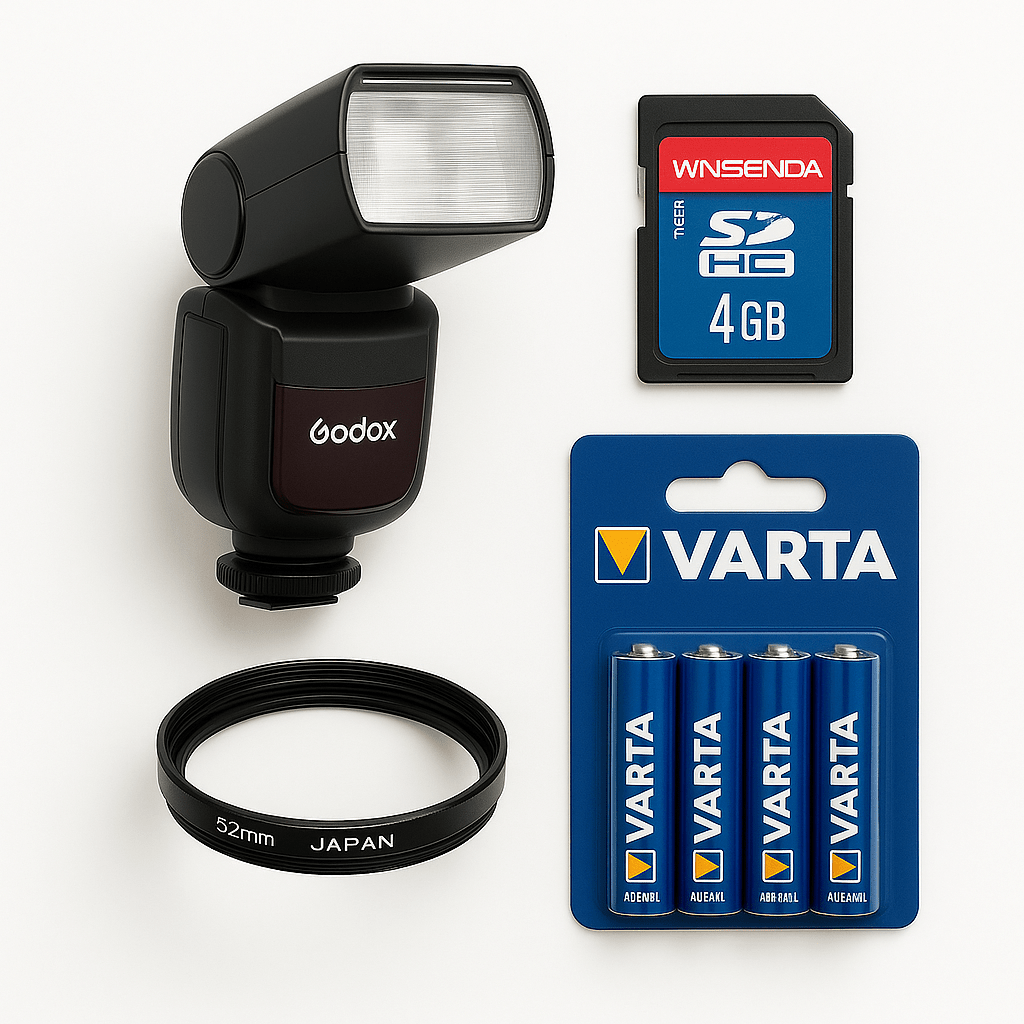
Instead of obscure battery types, the DL-25N runs on two AA batteries. They power both the motorized film advance and the flash, making it simple and inexpensive to keep the camera running. Rechargeable AAs are a great option for sustainable use.

Why the Fuji DL-25N Matters Today
A sustainable way into film photography
Buying a second-hand Fuji DL-25N extends the life of an existing camera instead of sending it to landfill. Paired with rechargeable batteries and reasonably priced 35mm film, it is a sustainable, low-impact way to explore film photography.
Perfect for casual, everyday images
Not everyone wants to adjust aperture, shutter speed, or focus. The DL-25N lets you concentrate on timing and composition. You can slip it into a bag, bring it to a party, or take it on holiday without worrying about gear settings.
Great backup or companion camera
Even experienced photographers sometimes want a lightweight backup. The DL-25N can sit alongside a larger SLR or professional body, ready for spontaneous snapshots or behind-the-scenes moments that you might otherwise miss.
Checklist: What to Check Before You Buy
Because the Fuji DL-25N is fully automatic, a few basic checks will tell you a lot about its health. When considering a second-hand copy, work through this simple checklist:
- Test film advance motor for smooth operation.
- Check flash response and shutter synchronization.
- Inspect battery contacts for corrosion.
- Examine lens clarity—avoid haze or fungus.
- Verify film door seals to prevent light leaks.
Many of these checks can be done quickly in-store: insert fresh AA batteries, open and close the back, trigger the shutter several times, and listen for consistent motor noise.
Maintaining and Shooting With the DL-25N
Care and storage
Store the camera in a dry place away from extreme heat or humidity. A small pouch or case, along with basic photography accessories like a cleaning cloth and spare batteries, will help keep it ready to go. Remove batteries if the camera will sit unused for several months to prevent leakage.
Loading film and shooting tips
Loading 35mm film into the DL-25N is straightforward: open the back, drop the film canister in, pull the leader across to the take-up, close the door, and let the motor advance. Watch the frame counter and film rewind indicator to ensure the film is actually moving.
Because of the fixed-focus lens, try to keep your main subject at a moderate distance—neither extremely close nor at the far horizon. In lower light, allow the flash to charge fully before pressing the shutter, and ask your subject to stay still when the flash fires to avoid motion blur.
Building a simple point-and-shoot kit
If you enjoy the Fuji DL-25N, you can easily expand into a small kit: a spare roll or two of film, a soft bag, and maybe a second point and shoot with a different focal length or flash style. Keeping things light encourages you to carry a camera more often—which usually leads to better photographs.
Conclusion: The Joy of Simple Film Shooting
The Fuji DL-25N is not about technical perfection; it is about the joy of straightforward film photography. With its fixed-focus lens, automatic exposure, and standard 35mm film, it lets you focus on moments instead of menus.
For beginners, casual shooters, or seasoned photographers wanting a no-pressure companion, a well-checked second-hand DL-25N offers a charming, sustainable way to keep film alive in your everyday life.
FAQs
Is the Fuji DL-25N a good camera for beginners? Yes. Its fixed-focus lens and automatic flash make it easy to enjoy shooting film without any technical knowledge. Just load film, point, and press the shutter.
What type of film does the Fuji DL-25N use? It uses standard 35mm film and automatically detects ISO from DX-coded cartridges in roughly the 100–400 ISO range.
Does the Fuji DL-25N need batteries? Yes. The camera uses two AA batteries to power both the flash and the film advance motor.
What should I check when buying a second-hand DL-25N? Test the shutter, film advance motor, and flash; inspect the lens for clarity; and make sure there is no battery corrosion in the compartment.
Curious to explore more film options? Browse our curated selection of analog cameras, handy photography accessories, and other characterful point and shoot cameras at DutchThrift.com.