


Introduction: The Alpa 10d at a Glance
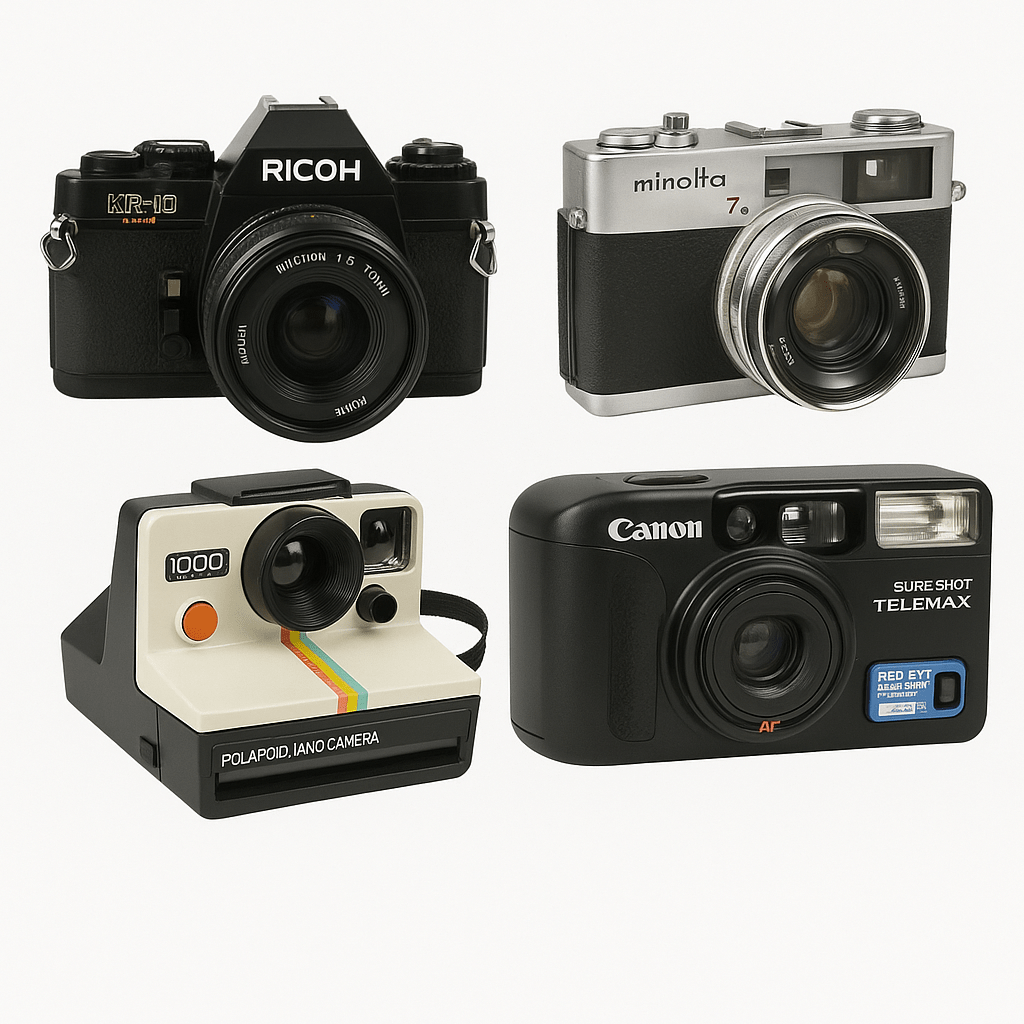
The Alpa 10d, also known as the Alpa Reflex 10d, is a 35mm SLR introduced in 1968. It belongs in the world of SLR film cameras, but with a character of its own: a Swiss-built body in light metal, designed for more than 100,000 operations, and a system of lenses and accessories that grew over many Alpa models.
Compared with the Alpa 9d, the 10d integrates the pentaprism into the body instead of using a separate housing, and it adds a non-rotating shutter speed dial with equally spaced markings. The result is a camera that still asks you to work in a deliberate, manual way. It is a rewarding body for anyone who enjoys analog cameras with real mechanical presence.
Shooting a manual SLR from this era is a slow, thoughtful process. You compose on a ground glass, set the aperture and shutter speed yourself, and read the meter before every frame.
Design Roots and Historical Background
From the 9d to the 10d
The 10d follows the Alpa 9d. The earlier model used a separate black crinkle-finish housing for the pentaprism, while the 10d builds it into the body. The shutter speed dial no longer rotates when you fire, and its markings are spaced equidistantly.
The light metal body is calculated for more than 100,000 operations.
A system that reaches back and forward
Alpa kept its lens and accessory system compatible across many generations. According to the manual, more than 30 Alpa lenses and supplementary items fit the 10d, and they also fit earlier models such as the 4, 5, 6, 7 and 8, the 4b, 5b, 7b and 8b, the 6c, the 9d and the 9f, with a few exceptions. The successor Alpa 11 series replaced the 10d's analog needle display with over- and underexposure lights in the viewfinder.
Key Technical Highlights
Metering and film speed
The 10d meters through the lens. Three CdS cells feed a highly sensitive galvanometer, and the viewfinder shows the result with an analog needle. The film speed scale is very wide, from 3 to 6400 ASA, with settings at 3, 6, 12, 25, 50, 100, 200, 400, 800, 1600, 3200 and 6400 ASA. Stopping down goes through Alpa's traditional external PAD coupling arm, and there is no open-aperture metering.
Shutter and handling
The fastest shutter speed is 1/1000 second, and there is a B setting for long exposures. A short-stroke, high-speed winding lever cocks the shutter and advances the film without taking the camera from your eye, and a parallelogram rewind crank brings the film back quickly. A built-in self-timer is also fitted.
Viewfinder and lens system
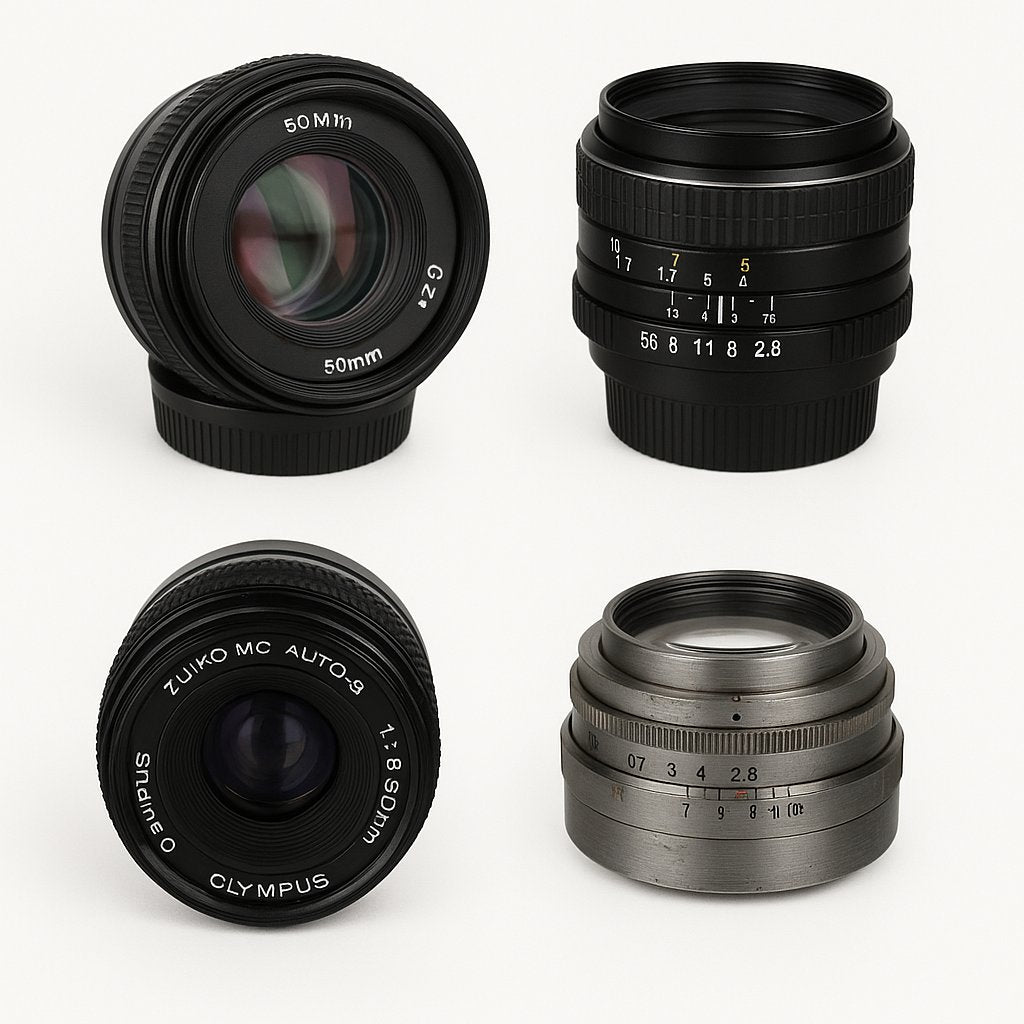
The standard ground glass has a built-in optical rangefinder with a 45-degree diagonal split image. The standard lens for the 10d is a 50mm macro lens, unusual for its time.
- Format: 35mm film, single-lens reflex
- Metering: through the lens, 3 CdS cells with galvanometer needle
- Film speed range: 3 to 6400 ASA
- Fastest shutter speed: 1/1000 second, plus B
- Standard lens: 50mm macro, stop-down via the PAD arm
Modern-Day Use in 2026
Where the 10d excels
In 2026, the Alpa 10d suits photographers who want a mechanical, hands-on 35mm camera with a distinctive system behind it. The macro standard lens, the split-image rangefinder screen and the quick winding lever make it a camera for careful, close and considered work rather than quick snapshots.
Use it for:
- Close-up studies of flowers, textures and small objects with the macro standard lens.
- Still-life and product-style work where you can take your time.
- Collecting and displaying a piece of camera history.
Practical shooting tips
- Use a handheld light meter as a second opinion, especially while you learn how the in-camera needle behaves.
- Choose a film speed that fits the light, and set the camera's ASA scale to match it.
- Keep the camera on a tripod for macro work, where small movements show.
- Shoot a test roll first, and note your settings so you can compare them with the results.
Buying and Maintenance Guide
What to check before buying used
Work through this short checklist before you buy:
- Look through the lens for haze, fungus or dust, and check the ground glass and pentaprism for marks.
- Test the shutter at every speed, and listen for hesitation on the slower ones.
- Wind the lever and rewind with the crank to see that both move smoothly.
- Check the self-timer, the PAD coupling arm and the speed dial for free, clean movement.
- Open the battery compartment and look for corrosion.
If possible, check the meter needle in bright and dim light; it should move steadily.
Power and batteries
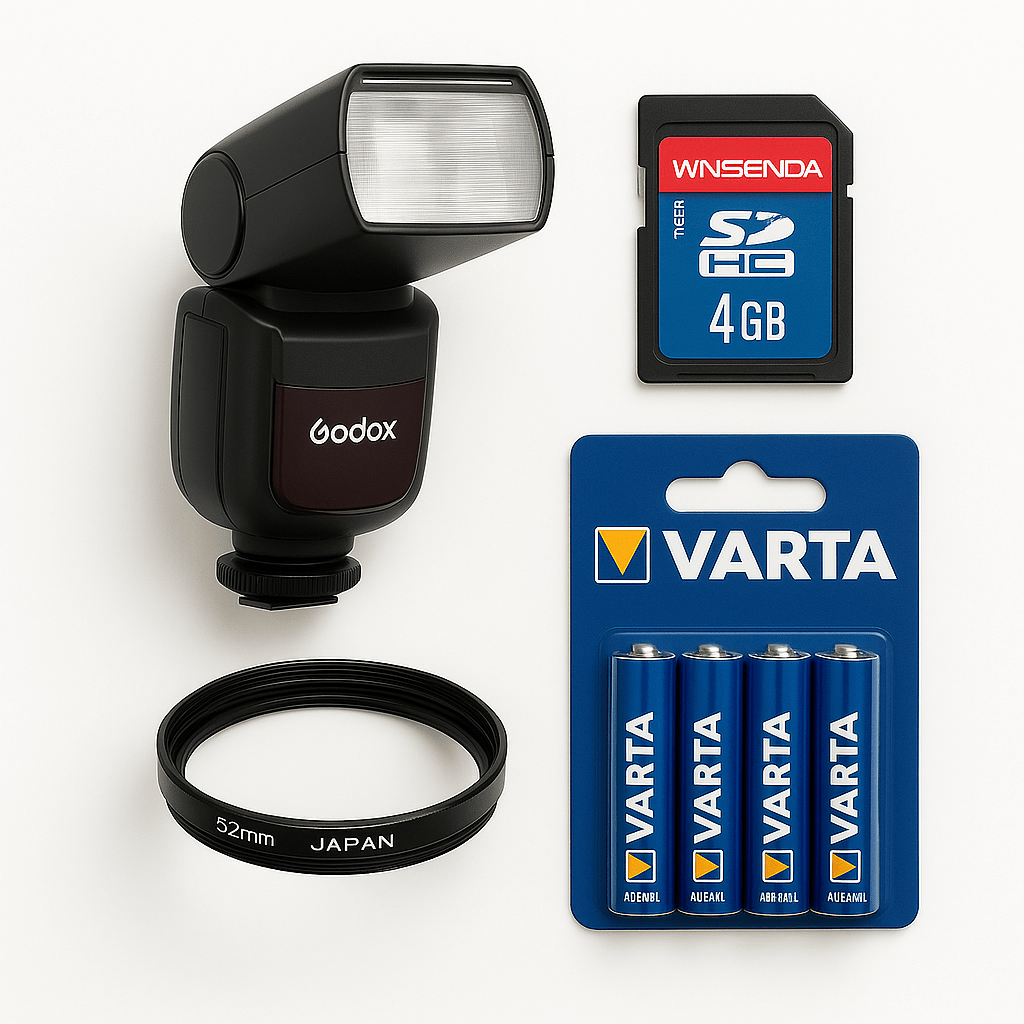
The 10d's meter was designed for two Mallory mercury PX 450 batteries. Mercury cells have been replaced by alternatives, so you need a modern substitute with the right voltage.
- Choose a replacement that matches the original voltage, and check the fit.
- Take the batteries out when you store the camera for a long time.
Basic care and accessories
A few simple photography accessories help keep the camera in good condition:
- A padded camera bag or case to protect the body from knocks and dust.
- A microfibre cloth and blower for the lens, never fingers or tissue.
- A sturdy tripod for macro work and slow shutter speeds.
Conclusion: A Mechanical Classic for Patient Shooters
The Alpa 10d is a camera for people who enjoy the process. It combines a built-in pentaprism, through-the-lens metering with a needle display, a split-image focusing screen and a 50mm macro standard lens in a light metal body calculated for more than 100,000 operations.
With careful inspection, a working meter or a handheld one, and a little patience, it can be a rewarding 35mm camera in 2026.
FAQs
When was the Alpa 10d introduced? The Alpa 10d is a 35mm SLR that was introduced in 1968.
Does the Alpa 10d have a built-in light meter? Yes. It meters through the lens with 3 CdS cells and a galvanometer. It uses stop-down metering via the PAD coupling arm and has no open-aperture metering.
What batteries does the Alpa 10d use? The manual specifies two Mallory mercury PX 450 batteries for the meter. Mercury cells are no longer used, so look for a suitable modern alternative.
What is the fastest shutter speed? The fastest speed is 1/1000 second, and there is also a B setting.
Where can I find the Alpa 10d manual? The original instruction manual is available as a free PDF download on this page.
Ready to explore cameras like the Alpa 10d? Browse our curated selection of SLR film cameras, discover more analog cameras, and pair them with quality photography accessories at DutchThrift.com.
Sources: the original Alpa 10d instruction manual; Alpa Reflex 10d on camera-wiki.org, text licensed under GFDL 1.3.