



Introduction: The Canon EOS IX 7 / IX Lite at a Glance
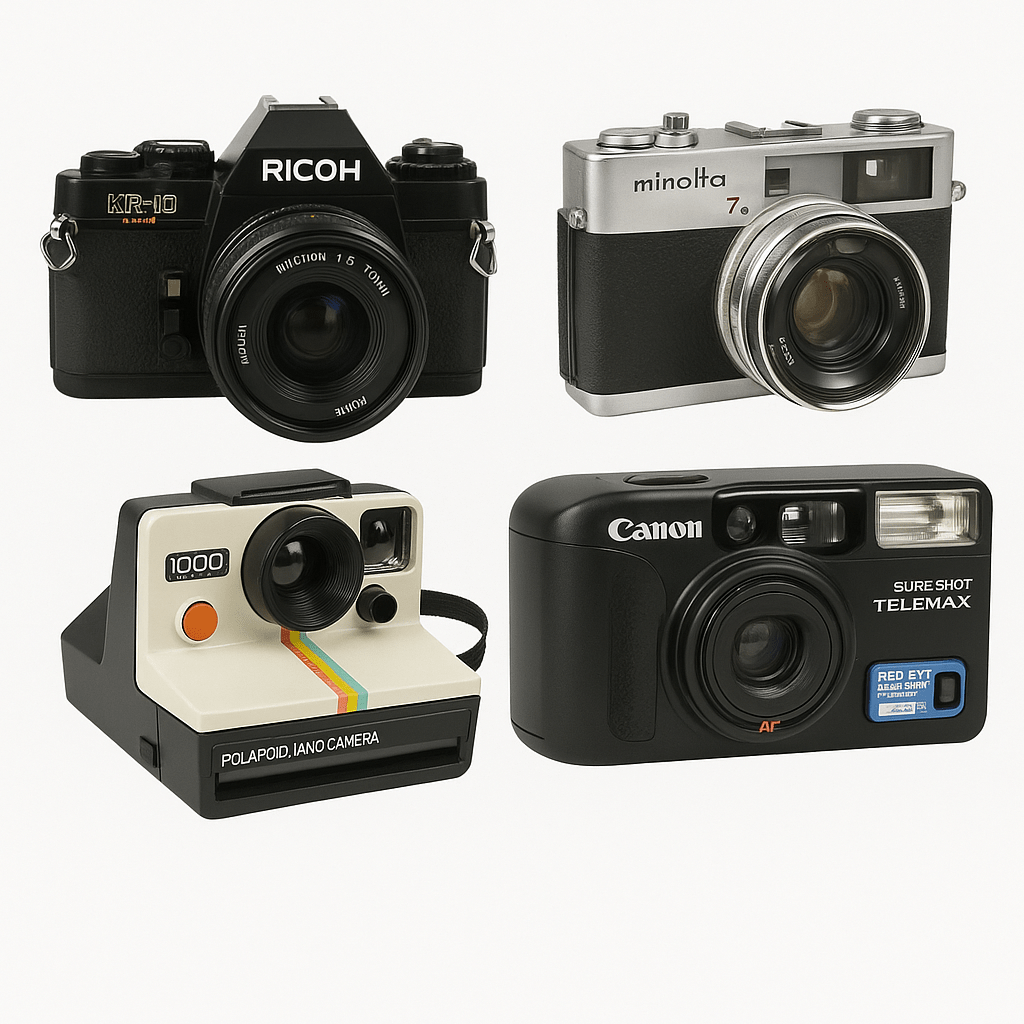
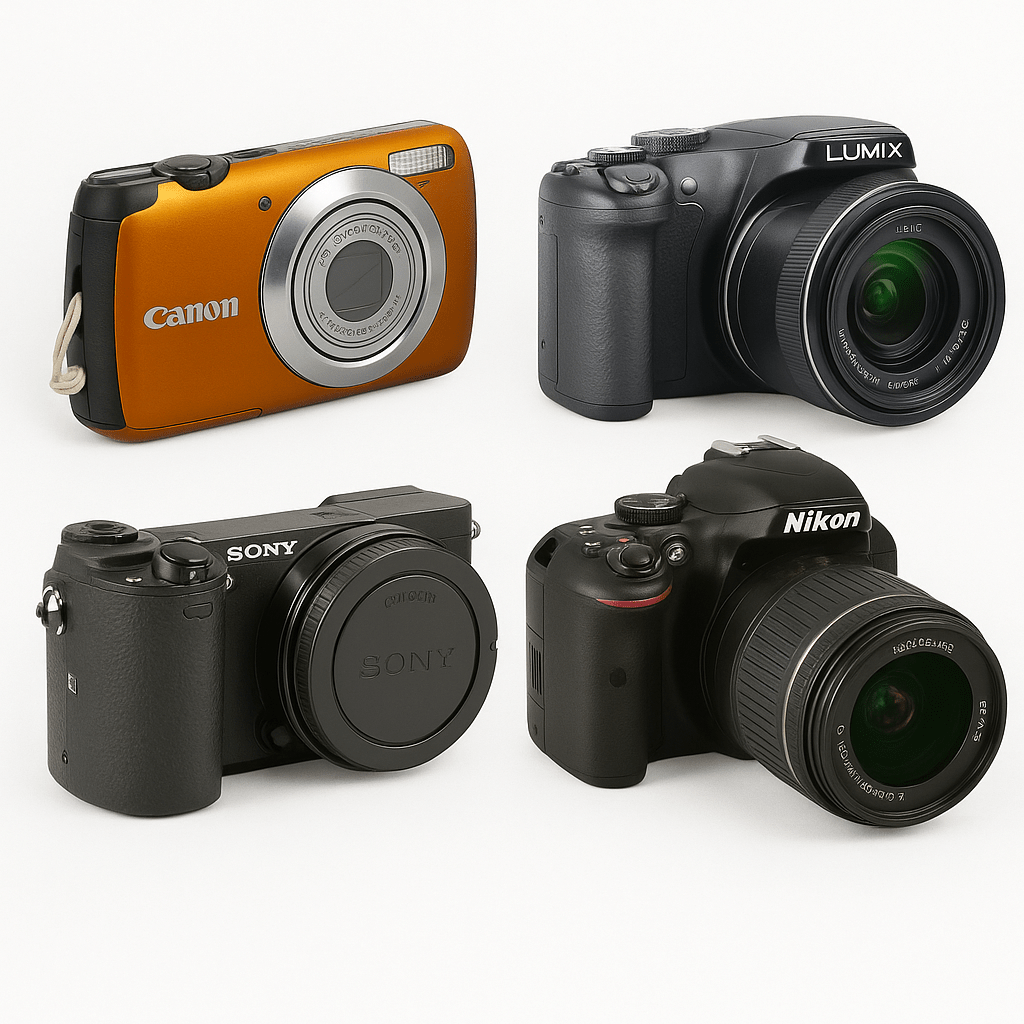
The Canon EOS IX 7, also sold as the EOS IX Lite, is a single-lens reflex for APS film. It is part of the world of SLR film cameras.
It accepts Canon EF autofocus glass, so it is not tied to one fixed zoom. Add a program dial, a back-panel LCD and a pop-up flash, and you get an SLR that covers the basics.

Simple bodies keep the basics of exposure, focus and framing in front of you, and every frame on a film cartridge feels worth taking.
Design Roots and Historical Background
A budget sibling in the EOS IX family
Canon positioned the EOS IX Lite below the standard Canon EOS IX, another APS film SLR. In practice, that makes it the simpler, lower-cost member of the pair.
Several names exist for the same camera. Besides EOS IX Lite and EOS IX 7, it is called the EOS IX 50 in Japan. If you search listings, try all three names, since sellers do not always use the same one.
The EF mount as its foundation
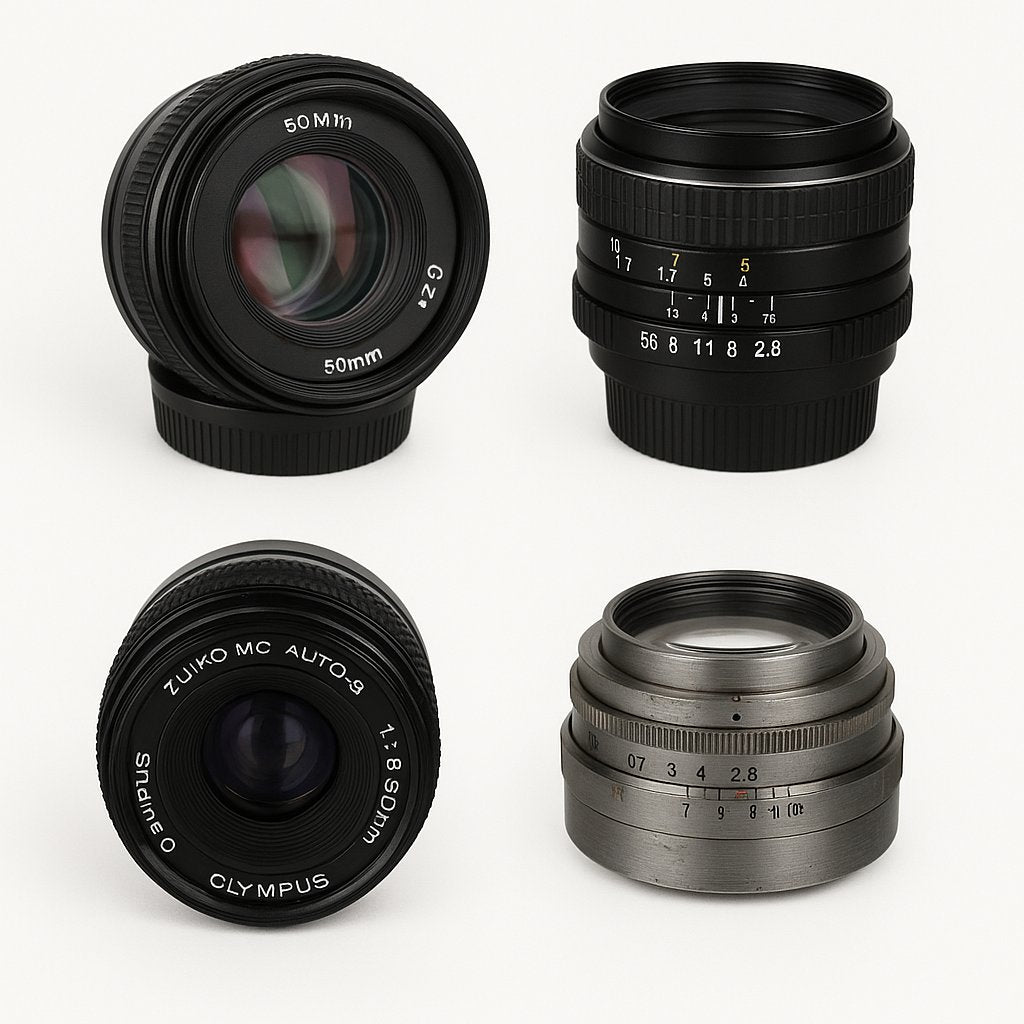
The camera belongs to the Canon EF mount family and uses autofocus lenses from that system. Two zooms are commonly found bundled with it: the EF 22-55mm f/4.5-5.6 USM and the EF 55-200mm f/4.5-5.6 USM.
Because the mount is EF, other lenses from the same system can be fitted too.
Key Technical Highlights
Focus, exposure and shutter
Three autofocus points do the focusing, and an AF assist beam helps the camera find its subject when light is weak. The shutter runs from 1/30 to 1/2000 s, with flash synchronisation at 1/125 s. Note that 1/30 s is the slowest speed on offer.
Think of the dial on the back as your choice of how much the camera decides. Auto leaves everything to the body, while P, AV and manual progressively give control back to you. For quick shots there are also five subject-based settings: night, sport, macro, landscape and portrait.
Flash and display
A pop-up flash is built in and meters with 3-zone TTL. If you need more light than the little unit provides, the hot shoe takes external speedlites, with the Canon 380EX and 280EX named as examples. Camera settings are reported on a panel at the rear, so you can check the state of the camera without guessing.
Size and power
The body weighs about 360 g, light for an SLR before you mount a lens. Power comes from two CR2 lithium batteries.
- Format: APS film, single-lens reflex
- Lens mount: Canon EF, autofocus
- Autofocus: three points with AF assist beam
- Shutter: 1/30 to 1/2000 s, flash sync 1/125 s
- Flash: built-in 3-zone TTL, hot shoe for speedlites
- Weight and power: about 360 g, two CR2 lithium batteries
Modern-Day Use in 2026
Where the EOS IX 7 excels
The mode dial and LCD panel make the camera simple to learn, while the manual and AV modes leave room to grow, and the EF mount adds lens flexibility.
Use it for:
- Learning exposure with the P, AV and manual modes
- Everyday snapshots using the kit zoom and the auto mode
- Portraits, landscapes and close-ups with the dedicated scene modes
- Flash photography with the pop-up flash or a compatible speedlite
Practical shooting tips
A few habits help:
- Keep shutter speeds comfortably above 1/30 s when shooting by hand, especially with the 55-200mm zoom.
- Use the sport mode or a fast shutter speed for moving subjects, and the AF assist beam in dim rooms.
- Try fill flash on bright, contrasty days to lift shadows on faces.
- Carry spare CR2 batteries.
Buying and Maintenance Guide
What to check before buying used
Work through these points before you decide:
- Check that the lens mount feels firm and that a lens locks in place and focuses.
- Look through the lens for dust, haze or fungus, and test the zoom ring if you have a zoom.
- Make sure the back LCD panel shows all segments clearly.
- Fire the pop-up flash and confirm that it opens, charges and fires.
- Open the battery compartment and look for corrosion on the contacts.
- Check the film door, seals and the camera body for cracks or heavy wear.
Since the camera uses APS film, confirm that you can get suitable cartridges and a lab that handles them before you commit.
Batteries and power
The camera takes two CR2 lithium batteries. When a camera seems dead, try a fresh pair before you suspect a fault.
- Fit both batteries in the correct orientation and check the contacts are clean.
- Remove the batteries when you store the camera for a long time.
- Keep a spare pair in your bag on any longer outing.
Basic care and accessories
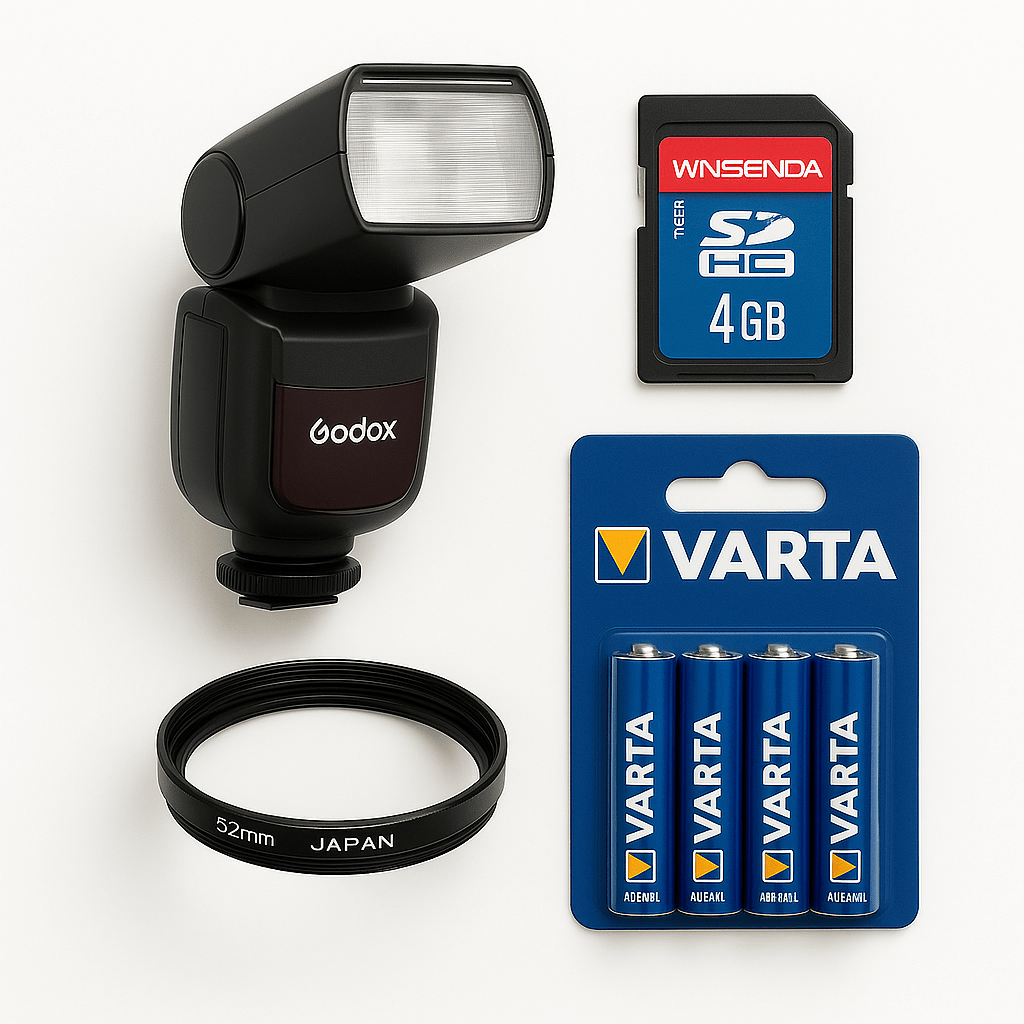
A few simple photography accessories keep the camera in good shape:
- A padded camera bag to protect against bumps and dust.
- A lens cap and a microfiber cloth with a blower for safe cleaning.
- A compatible speedlite, such as the 380EX or 280EX, if you like flash photography.
- A small tripod for steady shots when light is low.
Conclusion: A Small SLR with a Big Lens Choice
The Canon EOS IX 7 / IX Lite is the budget route into the EOS IX family, built around APS film and the EF lens mount. With three-point autofocus, a mode dial, a rear LCD panel and a built-in 3-zone TTL flash, it offers plenty of control at about 360 g.
If you want an SLR that works in auto mode or fully manual, and you can source the film, it deserves a look. Check the battery compartment, flash and lens carefully before buying.
FAQs
Is the Canon EOS IX 7 the same camera as the EOS IX Lite? Yes. The camera is known as the EOS IX Lite and the EOS IX 7, and in Japan it is called the EOS IX 50. It is the budget version of the Canon EOS IX.
Which lenses fit the Canon EOS IX 7 / IX Lite? Canon EF autofocus glass fits the mount. Common kit lenses are the EF 22-55mm f/4.5-5.6 USM and the EF 55-200mm f/4.5-5.6 USM.
What batteries does it use? Two CR2 lithium batteries power the camera.
What shutter speeds does it offer? From 1/30 to 1/2000 s, with a flash sync speed of 1/125 s.
Where can I find the Canon EOS IX 7 / IX Lite manual? The original instruction manual is available as a free PDF download on this page, under the first photo.
Ready to explore cameras like the EOS IX 7 / IX Lite? Browse our SLR film cameras, discover more analog cameras, and pair them with quality photography accessories at DutchThrift.com.
Sources: Camera-wiki.org (Canon EOS IX Lite) and the original Canon instruction manual.