



Introduction: The Fujica ST801 at a Glance
The Fujica ST801 is a 35mm single-lens reflex that Fuji built between 1972 and 1978. Among SLR film cameras it stands out because it swaps the usual meter needle for glowing diodes in the finder.
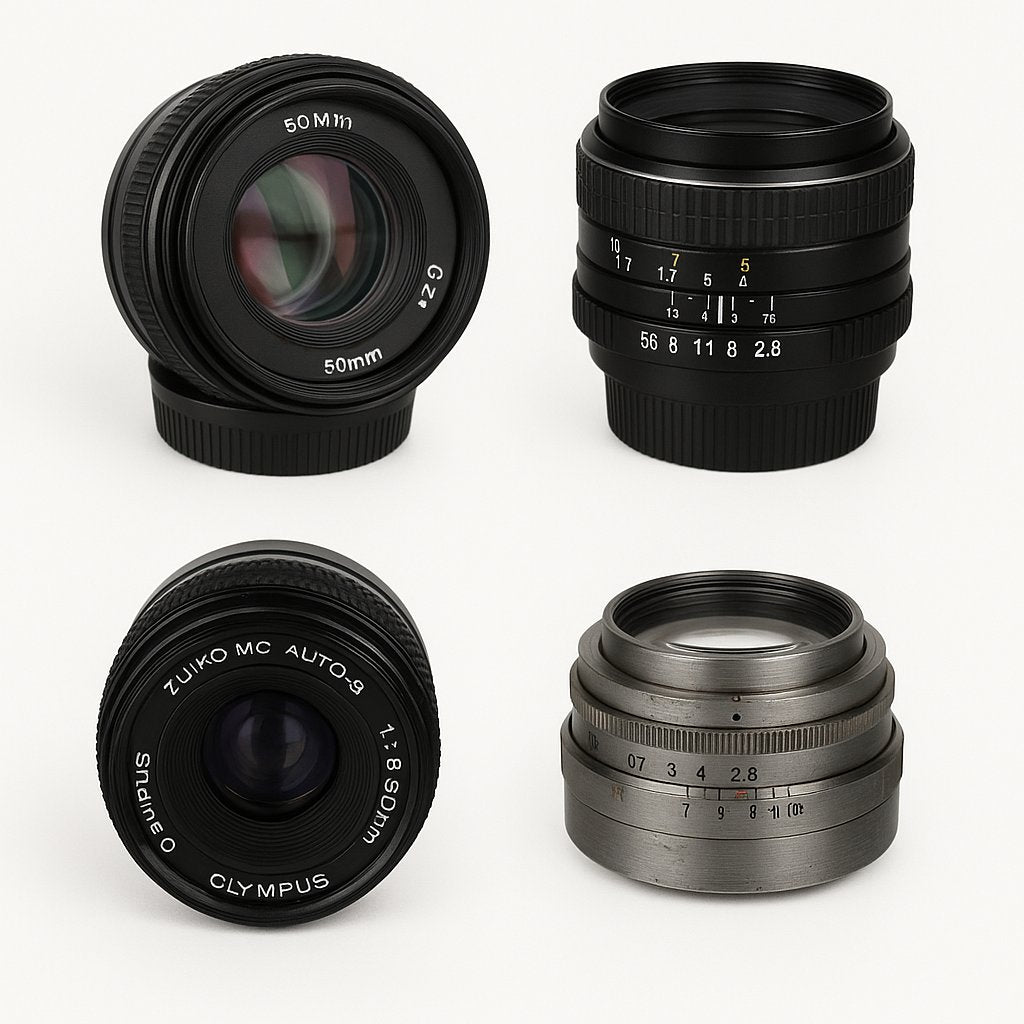
The negative size is the classic 24 x 36 mm, and the lens mount is a screw thread of the Praktica/M42 family, with a Fuji twist for open-aperture metering. The standard lens is the EBC Fujinon 55mm f/1.8, but the photos here show it with other glass too.

A manual SLR like this slows you down in a useful way: you set the speed, read the meter, turn the aperture ring and focus by eye, so every frame becomes a decision.
Design Roots and Historical Background
A Fuji SLR built around the screw mount
The ST801 uses the common 42 mm screw thread, so many screw-mount lenses can physically fit the body.
Fuji did modify the standard mount, though, to allow open-aperture metering. Lenses without that provision need stop-down metering.

The LED finder as a talking point
Camera-wiki credits the ST801 as the earliest 35mm SLR to carry LED indicators inside its finder. Seven diodes show the exposure state, so you read a lit position rather than following a needle. The meter itself uses silicon photocells, which the instruction manual says respond many times faster than the CdS cells common at the time.
Key Technical Highlights
Shutter, mount and viewfinder
The shutter is a focal plane design covering 1 s to 1/2000 s plus B. The finder uses a pentaprism with a Fresnel lens and a magnification of 0.96x with the 55mm lens, and the focusing screen combines a microprism area with a split image.
The body alone weighs 635 g, so it feels solid in the hand, and the standard EBC Fujinon 55mm f/1.8 takes 49 mm filters.
Metering and film speed
The built-in meter covers EV 1 to 19, and the film speed can be set from ASA 25 to 3200. That is a generous window for slow and fast film alike.
Flash and non-Fujinon lenses
Flash synchronisation is limited to 1/60 s, so fill flash in bright daylight needs a little planning. With non-Fujinon lenses you close the aperture to the working value before reading the LEDs.
- Format: 35mm film, 24 x 36 mm frames
- Shutter: focal plane, 1 s to 1/2000 s plus B
- Metering: silicon photocells, seven LEDs, EV 1 to 19
- Film speed: ASA 25 to 3200
- Weight: 635 g, body only
Modern-Day Use in 2026
Where the ST801 excels
In 2026, the ST801 is a good learning tool for manual exposure. The 1/2000 s top speed helps you shoot wide open on bright days, and the wide film-speed range gives you freedom of choice.
Use it for:
- Learning manual exposure with a clear visual meter
- Street and travel photography with a single prime lens
- Experimenting with screw-mount lenses on a sturdy body
Practical shooting tips
- Read the LEDs after you have set the aperture, then adjust shutter speed until the LEDs show the exposure you want.
- With non-Fujinon lenses, stop down before metering and open up again to focus if the lens lacks an automatic diaphragm.
- Keep flash shots at 1/60 s or slower.
Buying and Maintenance Guide
What to check before buying used
Work through this checklist, ideally with a fresh battery to hand:
- Light seals: look for sticky, crumbling or missing foam around the back door and mirror box.
- Shutter: listen to each speed and check that the slow ones sound clearly different from the fast ones.
- Meter: confirm the LEDs respond when you point the camera at bright and dark scenes.
- Battery compartment: look for white or green corrosion on the contacts.
- Lens: hold it up to a light and check for haze, fungus, dust and a smooth aperture ring.
- Finder: check that the focusing screen is clean and bright.
Open the back, fire the shutter at a fast speed and look through the empty film gate toward a light; an even bright rectangle is a good sign.
Power and batteries
According to the manual, the camera runs on one 6-volt silver oxide battery, listed as PX28 or Eveready 544. Fit a fresh cell when you test or use the camera.
- Check the type printed on the cell before inserting it.
- Remove the battery if you store the camera for months.
- Wipe dull contacts gently with a dry cloth.
Basic care and accessories
- Use a body cap and rear lens cap whenever a lens is off the camera.
- Keep a soft brush and blower for the film gate and a microfibre cloth for lenses.
- Browse our photography accessories for bags, straps and cleaning kits.
What to pay
On European marketplaces such as eBay, working examples are typically listed around €110–€155. Condition and the included lens decide where a camera lands.
Conclusion: Light-Emitting Diodes, Mechanical Soul
The Fujica ST801 is a thoughtful 1970s SLR that combines a classic manual workflow with a forward-looking LED meter. The wide film-speed range and screw mount make it flexible, while quirks like the 1/60 s flash sync keep it interesting.
If you like to understand how your pictures are made, a well-checked ST801 is a rewarding companion. For more from the same maker, read our guides to the Fujica ST605N and the Fujica ST-F rangefinder.
FAQs
What lens mount does the Fujica ST801 use? It uses a screw mount of the Praktica/M42 type, with a Fuji modification that lets Fujinon lenses support open-aperture metering.
What battery does the ST801 need? One 6-volt silver oxide battery, listed in the manual as PX28 or Eveready 544.
How does the ST801 show exposure? Seven LEDs in the viewfinder show the exposure instead of a meter needle.
What is the fastest flash sync speed? Flash synchronisation is limited to 1/60 s.
Where can I find the ST801 manual? The original instruction manual is available as a free PDF download on this page, under the first photo.
Ready to explore cameras like the ST801? Browse our SLR film cameras, the wider analog cameras range and our Fujifilm collection at DutchThrift.com.
Sources: the original Fujica ST801 instruction manual; the Fujica ST801 page on camera-wiki.org, text licensed under GFDL 1.3; price range based on eBay listings of complete cameras.