



Introduction: The Agfa Optima Electronic Sensor at a Glance
The Agfa Optima Electronic Sensor is a 35mm compact for photographers who would rather frame pictures than fiddle with settings. Among analog cameras it asks very little: drop in a roll, estimate the distance, compose and touch the release while the electronics handle exposure.
The release is what gives the model its name. Instead of a normal shutter button, the camera carries a big red Sensor contact that responds to a light touch.

Automatic viewfinder compacts shift the emphasis from settings to seeing. With exposure decided for you, attention goes to distance, framing and timing.
Design Roots and Historical Background
Where it sits in the Optima Sensor family
This camera is a Portuguese-built relative of the Optima Sensor 535: Agfa-Gevaert Portugal made it, but the technology inside is the same as in the 535 of 1976. The quickest way to recognise it is the faceplate, which has no model number at all. For the earlier sibling, see our article on the Agfa Optima 535.
Automatic exposure was the main selling point of the family, with a roomy viewfinder and the Paratronic shutter as supporting features.
The sensor point release
Agfa had been using its sensor point idea since 1968. What you touch is a thin red foil disc that covers the real release underneath. On the Electronic models, this one included, that release is an electromagnet, so contact with the foil triggers the shutter electrically rather than by pushing a lever.

Key Technical Highlights
Lens, viewfinder and body
The lens is an Agfa Solitar with a 40 mm focal length and a maximum aperture of f/2.8. The body measures about 104 x 68 x 54 mm (width, height, depth).
Focusing is done by estimation. Three symbols on the front ring stand for about 1.5 m, 3.5 m and infinity, and a metre scale below them runs from 0.9 m to infinity. In the viewfinder, the inner frame marks outline the picture area for subjects between 0.9 m and roughly 2 m.
Automatic exposure
According to the manual, the electronics set shutter time and aperture fully automatically and steplessly. You only tell the camera the film speed, using the inner ring of the lens mount: white numbers are DIN values and green numbers are ASA values. When you touch the Sensor button and a red signal shows at the right edge of the viewfinder, the camera is telling you to use flash.
Loading, flash and rewinding
A slide on the narrow side opens the back; the cassette goes on the left and the leader under the take-up spool on the right. The frame counter starts at A and shows the exposures remaining, and a serrated wheel on the underside turns as the film moves. A centre contact in the accessory shoe handles flash, and with a flash fitted you set the aperture manually with the rear ring. To rewind, press the R button and turn the rewind knob toward R.
- Fixed Agfa Solitar 40 mm f/2.8 lens.
- Fully automatic, stepless exposure control.
- Large direct viewfinder with a red flash signal.
- Agfa quick-load system and single-stroke advance lever.
- Three Varta 4626 (V 625 U) button cells.
Modern-Day Use in 2026
Where the Optima Electronic Sensor excels
This is a camera for relaxed, everyday film photography. Automatic exposure and quick loading remove most of the fuss.
Use it for:
- Walks and city snapshots in good daylight.
- Travel photography with a light camera.
- Family occasions without adjusting anything.
- Practising distance estimation on real film.
Practical shooting tips
- Set the film speed ring to match the roll before you take the first frame.
- Judge the distance carefully, and use the inner viewfinder marks for close subjects.
- If the red signal appears, add flash or look for more light rather than ignoring it.
- Keep your fingers off the lens and the measuring window.
Buying and Maintenance Guide
What to check before buying used
The electronics matter more than cosmetics, so test before you pay:
- Insert fresh batteries and confirm that the camera responds when you touch the red Sensor button.
- Look through the viewfinder for haze, dust or scratches.
- Inspect the Solitar lens for fungus, scratches and stiff focusing.
- Wind the film lever and check that the frame counter and the transport wheel move.
- Open the back and look for corrosion in the battery compartment and for worn light seals.
Also press the R button to check the rewind knob, and make sure the back closes firmly.
Power and batteries
The camera needs three button cells of type Varta 4626 (V 625 U). The manual gives a life of about one year and also lists UCAR EPX 635 and Mallory RM 625 N or PX 625 as suitable. Its battery check: with the camera ready to shoot (film transported), cover the measuring window and touch the Sensor button. If the red signal does not come on, all three batteries need replacing.
- Repeat the check whenever the camera has sat unused for a while.
- Pack a spare set of cells on longer trips.
- Take the cells out when you store the camera for a long time, to prevent leaks.
Basic care and accessories
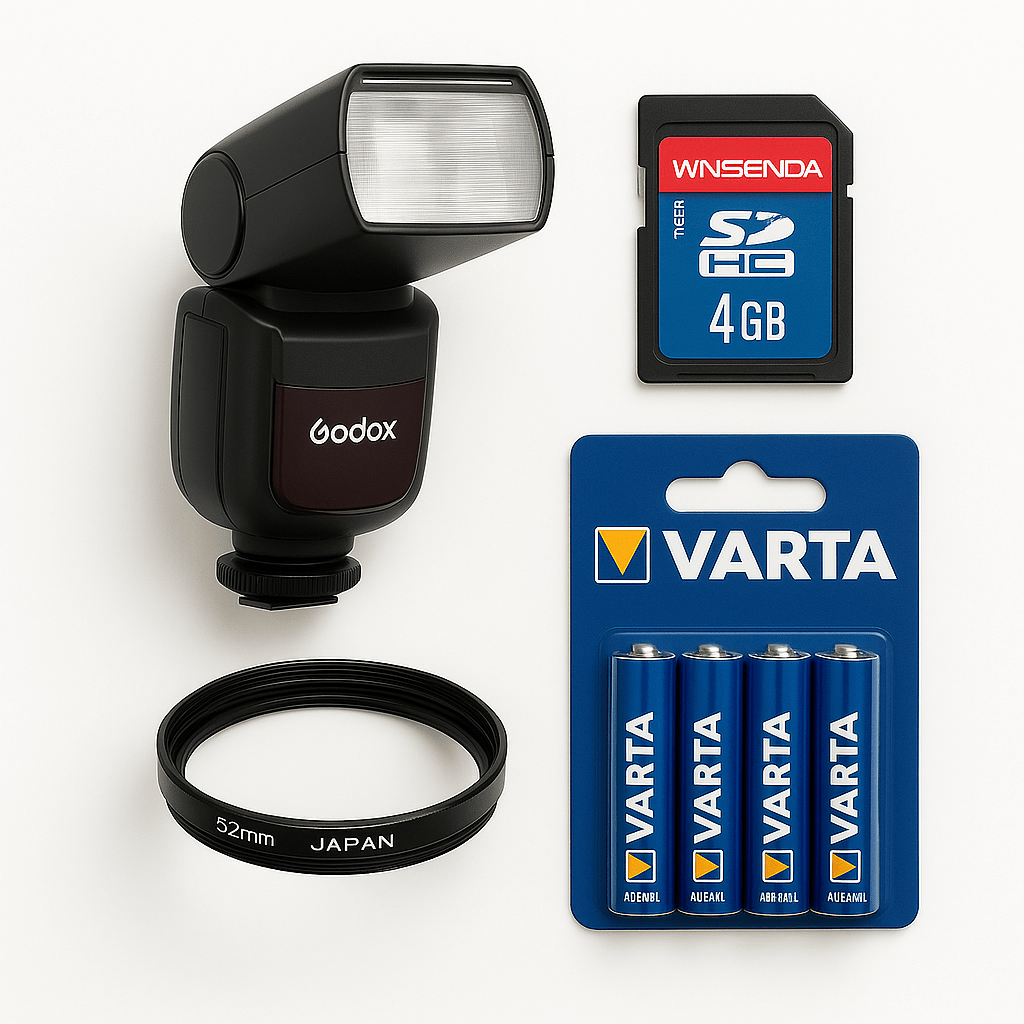
A few simple photography accessories help keep the camera in good shape:
- A soft case to protect the body and lens from knocks.
- A microfibre cloth and a blower for gentle cleaning of the lens and viewfinder.
- A small flash for the accessory shoe.
What to pay
On European marketplaces such as eBay, working examples are typically listed around €40–€60.
Conclusion: A Simple Automatic Compact
The Agfa Optima Electronic Sensor pairs an f/2.8 lens, a large viewfinder and automatic exposure with a distinctive red touch release.
For daylight walks and travel it makes a sensible, uncomplicated choice, provided the electronics respond and the batteries are fresh.
FAQs
What batteries does the Agfa Optima Electronic Sensor use? It takes three button cells of type Varta 4626 (V 625 U), good for about one year.
How do I test the batteries? With the camera ready to shoot, cover the measuring window and touch the Sensor button. If the red signal does not come on, replace all three batteries.
What does the red signal in the viewfinder mean? Seen at the right edge of the viewfinder when you touch the Sensor button, it means flash is needed.
Where can I find the Agfa Optima Electronic Sensor manual? The original instruction manual is available as a free PDF download on this page, under the first photo.
Ready to explore cameras like the Agfa Optima Electronic Sensor? Browse our curated analog cameras and pair them with useful photography accessories at DutchThrift.com.
Sources: original Agfa instruction manual (Dutch), Optima Sensor and Optima Sensor Series on camera-wiki.org, text licensed under GFDL 1.3; price range based on European eBay listings.